

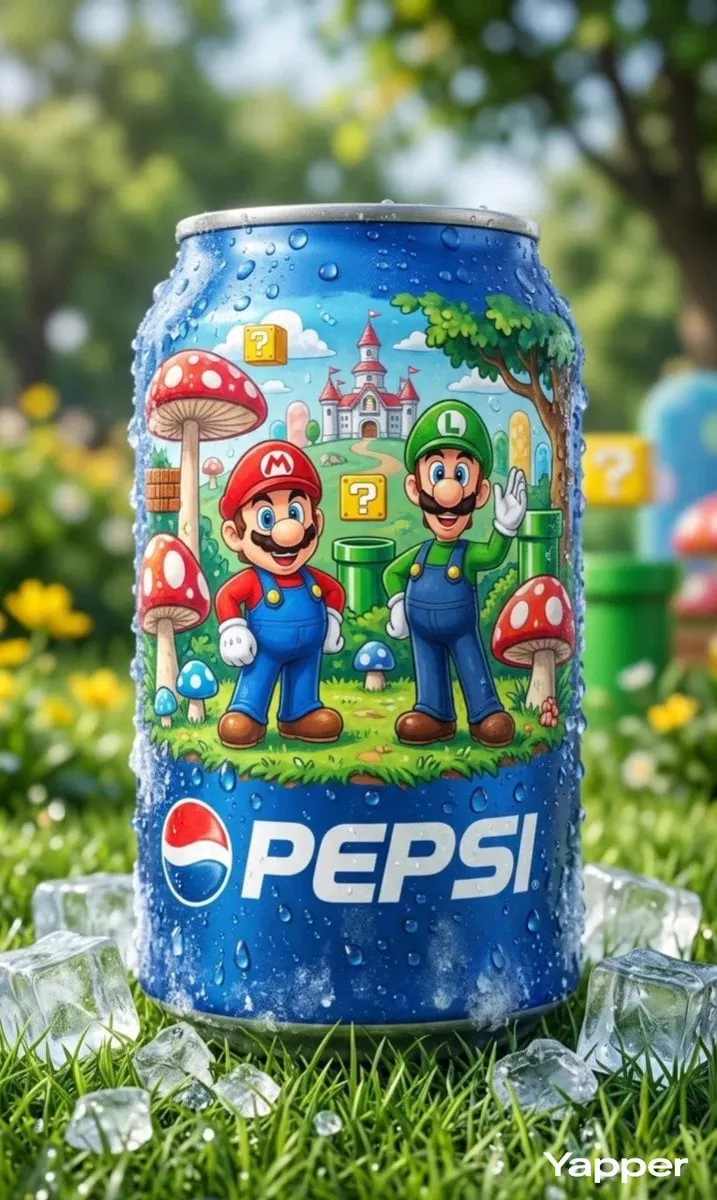
From static image to animated scene: a new era of video
The transition from static image to animated scene marks a seismic shift in digital content creation, moving from simple visual assets to complex, dynamically rendered cinematic sequences. By 2025, the market for AI-generated video is projected to surpass $18 billion, driven by advancements in diffusion models and transformer architectures.
This evolution is characterized by unprecedented control over motion, character consistency, and narrative coherence, substantially lowering the barrier to high-fidelity video production. The implications span marketing, filmmaking, and education, demanding creators adapt quickly to master multi-image fusion and model specialization.
The current landscape: what creators face in 2025
The creative industry is no longer debating if AI can create video, but rather how effectively specific models handle nuances like temporal consistency, physics simulation, and complex scene composition. The current landscape is hyper-competitive, featuring specialized models, each offering distinct advantages in fidelity and control.
Market projections indicate that the compound annual growth rate for text-to-video tools will exceed 35% through the end of the decade, fundamentally reshaping advertising budgets and independent film pipelines. Current challenges pivot around managing computational resources, maintaining character identity across long clips, and establishing clear intellectual property guidelines for AI-derived works.
Mastering temporal consistency
Temporal consistency is the bedrock of believable AI video, moving beyond mere frame-by-frame novelty to structured motion. Early models struggled with flickering, warping artifacts, and sudden identity shifts. Modern architectures address this through dedicated motion vectors and enhanced training data emphasizing sequential causality, turning what was once a statistical approximation into a controllable simulation.
Top-tier models now utilize sophisticated transformer blocks designed explicitly to track objects and scenes over time, ensuring a character's face or a specific prop remains unmodified throughout a clip. Multi-image fusion allows users to define key character frames that are then enforced across different scenes generated by various models — for example, applying a consistent look across a sequence that uses different engines.
The integration of self-attention mechanisms into the temporal dimension allows models to weigh the importance of past and future frames simultaneously, leading to smoother transitions and object tracking. This refinement drastically reduces post-production touch-ups previously required for motion artifacts.
Platforms must also offer robust mechanisms for overriding the model's internal temporal logic when necessary, such as enforcing a specific pose at frame 50. Explicit keyframe control gives the creator ultimate authority over the generated motion narrative, distinguishing professional tools from experimental releases.
Advanced prompt engineering and model specialization
As video generation matures, the focus shifts from basic textual descriptions to highly structured, nuanced prompting that interacts effectively with specialized model training. Creators must now navigate a library of models, each fine-tuned for specific aesthetic outcomes, resolution requirements, or motion characteristics.
The skill set evolves from simple prompt writing to model orchestration — understanding which specific model achieves the desired result for a given segment of a scene. This specialization allows for micro-adjustments that traditional, generalized models fail to provide.
Model calibration is now a key operational metric. Understanding that one model excels at texture rendering while another manages complex group compositions informs a creator's workflow. Prompting syntax has become semi-formalized, often requiring specific metadata tags or control codes to interface optimally with certain models. Ignoring these requirements results in adherence failure, where the model ignores crucial elements of the scene description.
From static seed to dynamic scene composition
The evolution from static image to animated scene heavily relies on advancements in control mechanisms that guide the generative process beyond simple text inputs. While early systems used single reference images, current technology utilizes control networks and multi-reference inputs to dictate pose, depth, and camera angle dynamically.
Multi-image fusion leverages this principle, ensuring that a character defined across several static images maintains their defining characteristics when animated. This integration of static structure into dynamic generation is the current frontier of creative control, allowing for precise scene blocking.
Camera control is now granular, moving past simple pans and zooms. Some models explicitly offer cinematic lens controls, allowing creators to specify focal length, depth of field simulation, and complex dolly moves purely through textual commands. Pose and skeletal control inherited from image models is now extended temporally, enabling precise, highly specific character actions that would be impossible to prompt purely via text across a full video sequence.
The combination of image input reference and temporal guidance means a static concept board can be directly translated into a timed, animated storyboard, streamlining the pre-production phase dramatically. This speed of iteration is changing how agencies structure creative pitches and concept development workflows. With an AI video generator, you can test these concepts rapidly before committing to a full production.
The architecture behind high-fidelity generation
The successful transition from static image to animated scene requires more than just better algorithms; it demands robust, scalable infrastructure capable of handling massive computational loads, managing diverse proprietary models, and ensuring content creators can reliably access these resources.
Modern platforms necessitate an architecture that supports rapid iteration and massive scaling. Enterprise-grade modularity ensures that components like user management, subscriptions, and billing operate independently yet communicate seamlessly. The modular structure is vital for integrating a growing library of external models without destabilizing core services.
The economic reality of high-fidelity AI video generation hinges on GPU availability and efficiency. Task queue management functions as the critical gatekeeper, managing the pipeline of requests against finite computational resources. Effective queue management prevents system overloads and ensures predictable service for users across different tiers.
Empowering creators: training, monetization, and community
A major differentiator in the 2025 AI video space is the shift towards creator-owned models and revenue sharing, moving beyond simple subscription access. Platforms that allow users to train and publish their own AI models democratize tool creation, rewarding skilled users who can fine-tune base architectures for niche styles or specific character consistency.
A community marketplace serves as the hub for this exchange, fostering innovation by incentivizing the development of niche tools — an expert model for creating consistent film noir styles, or a model specialized in a particular aesthetic. Revenue sharing based on model usage provides tangible economic returns for technical contributions, fostering a virtuous cycle where platform utility increases alongside community investment.
The director's role reimagined
The evolution from static image to animated scene introduces complexity that overwhelms novice and intermediate creators: cinematic language, pacing, and scene direction. AI agent directors integrate high-level directorial intelligence into the pipeline, acting as an automated storyboarder, cinematographer, and editor, translating abstract creative goals into concrete parameter sets for the underlying video models.
This fundamentally changes the workflow by interpreting intent rather than just instruction. If you prompt for a "tense confrontation scene," the system autonomously selects appropriate camera techniques — perhaps a low-angle shot followed by a rapid reverse-shot. This layer of AI direction manages intelligent scene composition, automatically adjusting framing, rule-of-thirds adherence, and dynamic focal depth to maximize narrative impact.
The intelligence is derived from analyzing thousands of professionally directed films, allowing it to suggest shots that maximize emotional resonance. This acts as an immediate educational tool for emerging filmmakers learning cinematic language.
For scene transitions, the system analyzes the required emotional jump between two generated clips and selects the most effective bridge, such as a smooth dissolve or a sharp cut. The suggestions are integrated directly into the parameter fields of the selected generative model, effectively translating directorial vision into technical settings.
A practical workflow
- Start with a strong static concept: composition, color, and character design.
- Build multi-image references to lock character identity across scenes.
- Choose the right model for each segment: texture, motion, or narrative flow.
- Use keyframe control to enforce specific poses and camera moves.
- Let the AI director suggest framing, pacing, and transitions.
- Iterate rapidly — test multiple versions before finalizing.
Conclusion
The evolution from static image to animated scene has fundamentally transformed video production. Temporal coherence, model orchestration, and intelligent direction have lowered the barrier to cinematic-quality content. For creators, the new competitive edge lies in mastering these layers: knowing which model to use, how to lock consistency, and how to direct the machine toward a compelling narrative. The technology is ready — the opportunity is yours.
Ready to put these techniques into practice? Start with the AI image generator and the AI video generator, or explore more tools on the text-to-video page.
