
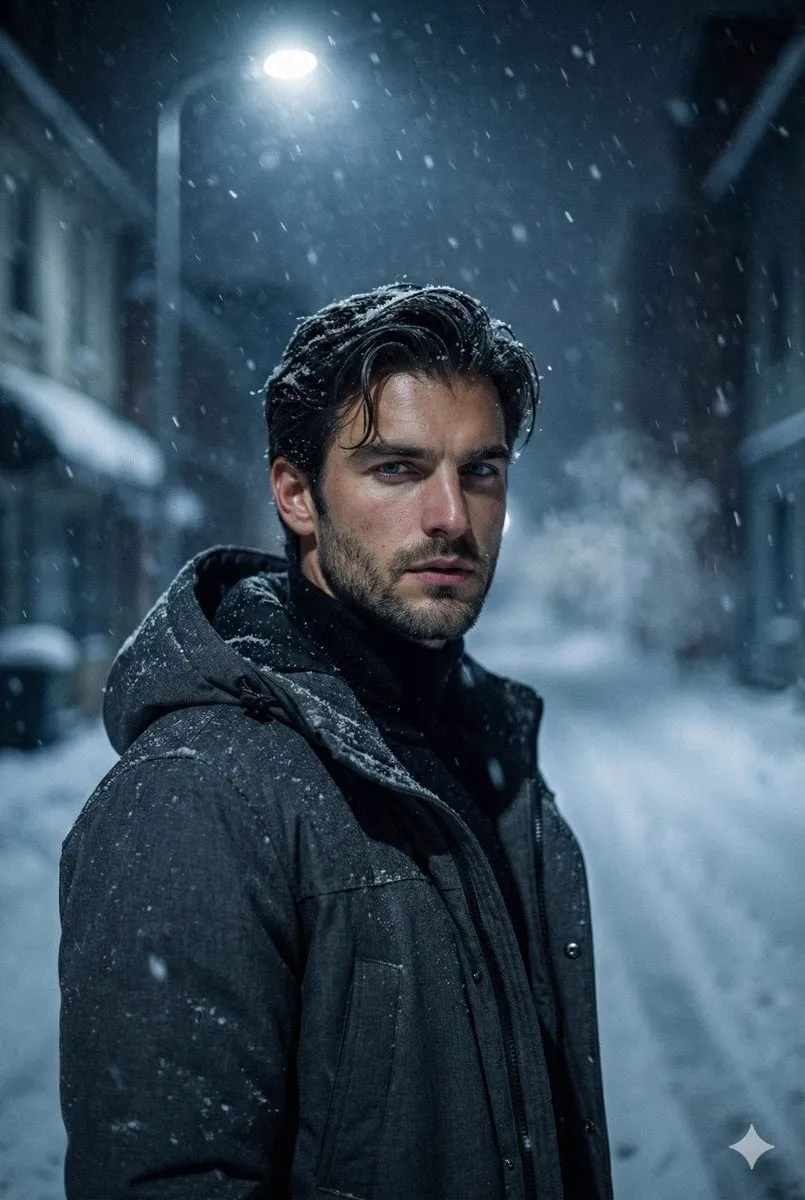

Synthesize Perfect Footage: How Prompts Become High-Quality Video
The era of purely manual video production is rapidly yielding to sophisticated AI-driven synthesis, making the ability to transform nuanced text prompts into high-quality, consistent video footage a critical bottleneck solver for the creative industry. Content velocity is paramount, and traditional production pipelines cannot keep pace with the escalating demand across digital advertising, training simulations, and entertainment verticals.
This article explores the architecture, model diversity, and directorial intelligence that make it possible to synthesize high-quality video from simple language commands.
The coherence problem
The primary challenge has historically been translating abstract creative concepts — the 'prompt' — into predictable, high-fidelity visual results that adhere to established cinematic rules. The main challenge is ensuring characters and environments remain consistent across dynamic scenes.
This is addressed through modular backend architecture that supports the dynamic loading and orchestration of many specialized generation models. This infrastructure allows creators to bypass limitations often found in siloed tools, instead utilizing specialized engines for specific stylistic or physical realism needs, all managed cohesively under one roof. Strategic aggregation of top-tier models, coupled with robust character consistency tools, marks a significant leap forward in prompt-to-video fidelity.
Decoupling model selection and prompt execution
The commitment to flexibility is embodied in a decoupling strategy that treats each AI model as a swappable service provider. This allows the platform to seamlessly integrate the newest and most specialized models alongside established performers.
The AI model management component constantly monitors the performance, resource cost, and specialization of each offering, dynamically adjusting routing tables. This means a creator needing hyper-realistic texture detail might be routed to one model, while one prioritizing rapid iteration might use another. This granular control ensures that the creator's prompt intent is matched with the optimal synthesis technology available at that moment, preventing generic, middle-of-the-road output.
A practical way to explore this is through Domer's AI video generator, where you can test different engines on the same prompt.
Leveraging multi-image fusion for character consistency
One of the most persistent failures in early text-to-video generation was the inability to maintain character keyframe consistency across multiple shots or scenes — a major hurdle for narrative filmmaking. Multi-image fusion overcomes this significant challenge.
Users upload reference images — perhaps several angles of the protagonist — which the system uses as hard constraints during generation, regardless of the selected model. The system compares new frame generation against these stored keyframes, actively adjusting latent space parameters to enforce visual continuity in facial structure, costume, and key features.
This process is crucial for professional narrative continuity. The multi-image fusion acts as a powerful style transfer anchor, stabilizing the identity of subjects even when camera angles, lighting, or scene descriptions change dramatically. This technology significantly lowers the barrier for serialized content creation: filmmakers supply character references, and the system enforces scene consistency across the entire project timeline.
The role of AI agent directors
The prompt is only as good as the director interpreting it. An AI agent director functions as an intelligent layer between the user's input and the raw video generation engine. It processes the narrative context provided in the text prompt, offering automated suggestions for cinematography, scene composition, and shot sequencing.
For instance, if a user prompts for a dramatic confrontation, the agent might suggest using cinematic lens controls to achieve a tighter framing or recommend a specific camera movement vector. This guidance elevates novice prompts to professional standards, making the synthesis part of the process inherently higher quality.
By automating complex directorial choices, the agent accelerates the feedback loop, allowing creators to iterate on stylistic choices in minutes rather than hours.
Navigating the model ecosystem
A curated library of AI video models encompasses various strengths from raw speed to hyper-realism. The platform manages these diverse capabilities through a transparent cost system, where each model carries an associated cost reflecting its computational intensity.
Understanding which model to deploy for a specific prompt segment is the key to synthesizing perfect footage efficiently and cost-effectively.
- Premium engines: the pinnacle of current text-to-video capabilities, often requiring higher resource expenditure but delivering output that challenges traditional cinema quality.
- Specialized models: catering to niche stylistic requirements or specific geographical performance strengths.
- Cost-effective options: high-throughput models for bulk content generation where volume meets quality thresholds.
The sheer diversity means that a single prompt can be tested across different engines to see which best captures the feeling intended by the creator, moving beyond simple visual representation to true emotional synthesis.
Enhancing visual integrity post-generation
Achieving perfect footage transcends merely generating a sequence of frames; it demands visual, auditory, and temporal cohesion. Dedicated image processing modules handle complex tasks such as style transfer refinement and high-resolution upscaling that might be inconsistent across different underlying AI models.
Style transfer capabilities allow users to apply detailed textural or lighting schemes uniformly across clips generated by entirely different models, ensuring visual homogeneity across an entire production timeline. This level of granular editing means creators can rely on the AI for the heavy lifting of scene construction, while using the dedicated toolset for the final artistic polishing.
For creating strong reference images, the AI image generator and models like GPT Image 2 provide excellent foundations. Then use image-to-video to bring them to life.
Integrating coherent soundscapes
Perfect footage demands perfect sound. Integrated audio tools include AI voice synthesis, background music generation, and sound effect synthesis. These tools ensure that video synthesis is not merely a silent visual exercise.
When the visual transition is fast, the acoustic response must be equally fast. Adaptive sound effect generation analyzes the visual movement of the transition and creates a unique sound design that matches the visual event. This level of integration means creators can deliver complete, broadcast-ready pieces without leaving the platform.
Conclusion
Synthesizing perfect footage from prompts is a structured process. The key principles are:
- Decouple model selection from prompt execution for maximum flexibility.
- Lock character identity with multi-image fusion across shots.
- Use AI agent directors to elevate prompts to professional standards.
- Navigate the model ecosystem strategically: match the engine to the task.
- Integrate post-generation refinement and sound for complete pieces.
With this approach, prompt-to-video synthesis moves beyond mere novelty towards production-ready asset creation — accessible to any creator with the right workflow.
