
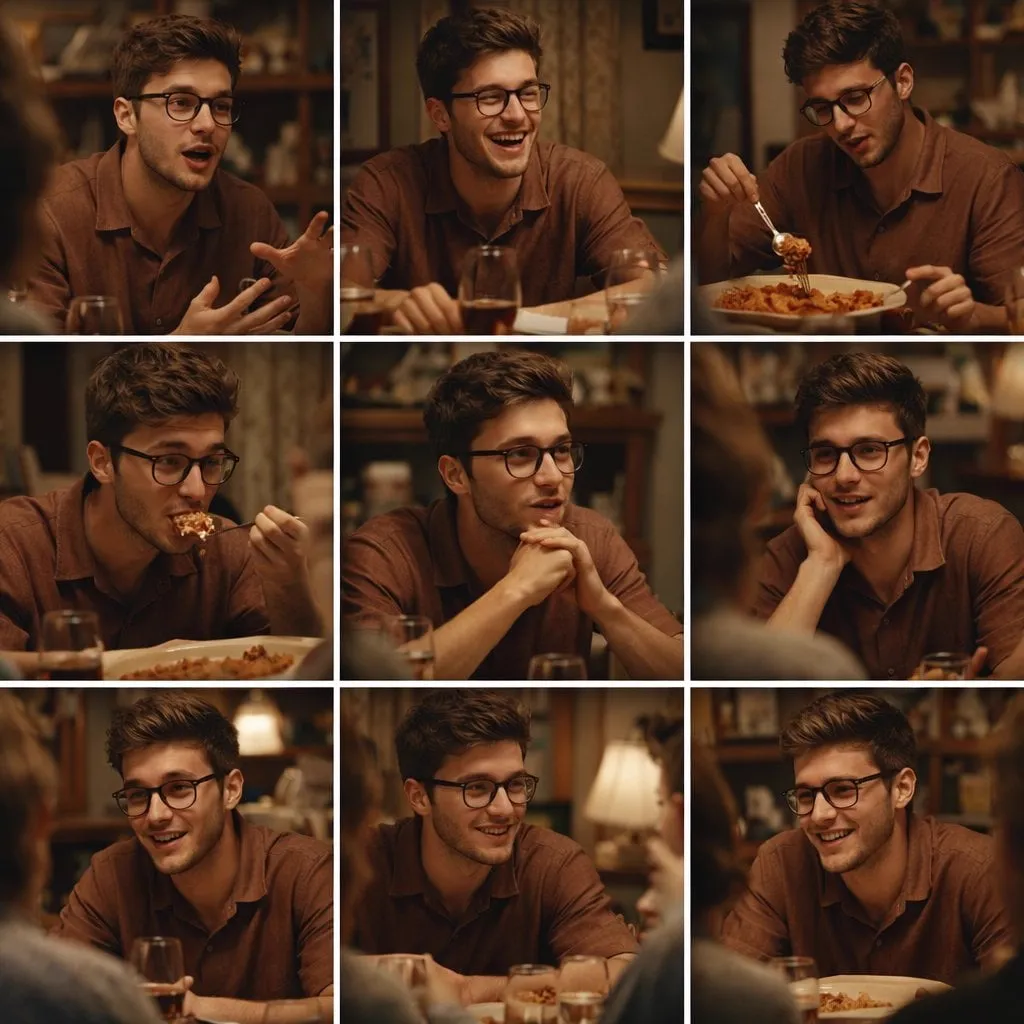
Keeping your creations connected from text to film
Text-to-video has come a long way in a short time. The first generation of tools could produce a striking, aesthetically pleasing clip, but each clip was essentially a one-off. Characters appeared in a single scene and then vanished, unable to carry a story across multiple shots. The big leap of the current era is continuity: the ability to take a text brief and produce a connected film, not just scattered fragments.
The mechanism that makes this connectedness possible is multi-image fusion. By anchoring a subject's identity across scenes, it lets you move freely from text, to still images, to a fully joined animation. This guide walks through why that continuity is a turning point for AI video, how the technology keeps your creations coherent, and how to build a workflow that turns a concept into a finished, connected film.
The breakthrough from clip-making to film-making
In the early phase of text-to-video, the novelty was simply that a model could turn words into moving pictures. A raccoon playing drums by a campfire, a pan across a city street — these were delightful but self-contained. They didn't compose into longer stories, because there was no mechanism to keep one raccoon looking like the same raccoon two shots later.
The realism threshold has since climbed, driven by newer model generations, but raw realism only increases the demand for consistency. Once clips look real, viewers notice inconsistency more sharply than ever. A realistic character that changes face between scenes is more jarring than a stylized one that stays put. So continuity became the gate for genuinely cinematic output.
Why a connected sequence outperforms isolated clips
A connected film has narrative power that isolated clips never will. It can establish a setting, develop a character, build tension, and deliver an emotional payoff. For brands and storytellers, this is the difference between content that is merely attractive and content that actually communicates something.
Connected sequences also earn more from an audience's attention. A viewer who follows a character across scenes becomes invested in the outcome. That investment drives longer watch times and more engagement, which are exactly the signals platforms reward.
How multi-image fusion builds continuity
Multi-image fusion is the engine of this connectedness. The idea is straightforward: instead of describing a subject only in words, you give the model multiple reference images that define exactly how that subject looks. The model then uses those references to keep the character consistent across every scene you generate.
This is a qualitative leap over prompt-only generation. Words are fuzzy — "red jacket" could mean many things. A reference image is exact. Once the model is anchored to a visual identity, it can animate that subject across a whole sequence without reconstructing it from scratch each time and drifting.
Anchoring identity with reference images
Your reference set is your character's contract with the model. Provide images from several angles and, where possible, in several poses or expressions. This gives the model a complete picture to work from, which makes it far more likely to keep the design consistent while still allowing natural motion.
Think of the reference set as a model sheet, the same tool animators have used for generations. The more thorough it is, the more confidently the model preserves the identity through even complex scenes.
Keyframes as the skeleton of a film
Keyframes are the fixed points that define the arc of your animation. They are the images your final video must honor — the opening shot, the pivotal moment, the closing frame. Using multiple reference images, you can set keyframes that do double duty: locking the composition and locking the character's identity simultaneously.
Plan your keyframes before filling in motion. Once the skeleton is in place, the model animates between those points while respecting them. This turns a chaotic generation problem into a structured one, and structure is what makes a connected film possible.
From concept to connected film in practice
Building a connected film means treating the work like production rather than one-off prompting. Start with the idea: who is the character, where does the story happen, what happens. Lock the identity with references, draft the keyframes, plan the shots, and assemble the sequence.
The payoff of this planning is predictability. Because your identity and keyframes are fixed up front, the scenes you generate will connect. When you press play, the character is the same character, and the world reads as one continuous place.
What the technology handles and what you decide
Modern orchestration tools take over a lot of the mechanical heavy lifting: managing multiple models, keeping the asset library organized, and queuing render tasks. What remains yours is the creative direction — the storytelling choices that give the film meaning and the aesthetic judgment that gives it character.
Think of yourself as the director. You decide the tone, the pacing, and the message; the tooling makes those decisions renderable. This division of labor is what lets a single filmmaker produce work that looks like it came from a small studio.
Choosing tools that protect your identity assets
Not every tool is equally good at preserving identity. When you evaluate options, ask how well they manage reference images and keyframes. Do they let you build a reusable identity library? Can you enforce stability across long sequences? These capabilities matter more than raw rendering speed.
A strong asset library is your long-term moat. Every approved reference, every tested keyframe, and every proven preset becomes reusable fuel for future films. The tools that protect and organize those assets deserve a permanent place in your stack.
Workflow transformation for creators
Adopting this approach changes your daily workflow. You spend more time up front on identity and story, and much less time fighting drift and redoing failed generations. For creators, that shift is liberating: the creative intent you invest keeps paying off across an entire sequence rather than dying after one scene.
It also changes how you schedule work. Planning happens once; production becomes a smoother, more mechanical phase. Projects that previously felt like gambling become reliable enough to promise and deliver on schedule.
Serialized content and long-running characters
The method particularly shines for serialized work. If you're producing a recurring series or a long-running character, the reuse value is enormous. One identity kit serves every episode, so each new piece starts from a solid foundation instead of re-solving an old problem.
That reuse turns your brand into a durable asset. Viewers begin to recognize your character and your world, and recognition translates directly into loyalty and predictable performance on the platforms that matter to you.
Common pitfalls to avoid
The classic mistake is skipping the identity step and trying to generate a connected film from prompts alone. It rarely works, and the rework eats all the time you thought you saved. Another pitfall is under-building your reference set, then wondering why the character drifts in complex scenes.
Resist the temptation to over-automate. Let the tooling handle mechanics while you remain the creative gatekeeper. A connected film still needs a human eye on tone, pacing, and meaning; that judgment is what elevates it from a tech demo to a story.
FAQ
What is the main advantage of multi-image fusion?
It anchors a subject's visual identity so it stays consistent across many scenes, which is what turns isolated clips into a connected film.
Do I need references for every project?
For anything with a recurring subject, yes. If you want a character or product to appear in multiple scenes, a reference set is essential.
How many keyframes should I plan?
Enough to define the story's spine — opening, a turning point, the ending. You can refine from there once the skeleton holds.
Is this worth learning for short-form social content?
Yes. A connected, multi-shot short with a consistent character stands out immediately and earns far more watch-through than a random sequence.
Can a single creator produce a connected film?
Yes. The orchestration tools do the heavy lifting, leaving the creative direction of a full film to one person.
Your next connected project
Start smaller than you think. Pick one character, one setting, and a short sequence of three or four shots. Build the identity kit, plan the keyframes, and generate a connected draft. Review how the character holds across the scenes and refine until the sequence reads as a single film.
Once that first miniature film works, you'll understand the difference instantly: you're no longer hoping a video stays coherent, you're building it to be coherent. That reliability is what makes the leap from text to a truly connected film possible — and it's available to you today.
Organizing your creative assets like an asset library
A connected film project generates a surprising amount of material: reference images, keyframes, prompts, rendered clips, and versions. If that material is scattered, you lose time hunting for files and risk building scenes from outdated references. Treating your creative assets like a managed library is a practical move that keeps projects coherent and fast.
Establish a clear structure from the start. Keep identity references separate from working files, name versions deliberately, and record which keyframes and references were approved for the final cut. When the library is tidy, every scene you generate points back to the same trusted foundation, and consistency practically takes care of itself.
Versioning and approval tracking
Once you involve multiple scenes or collaborators, version control stops being optional. Adopt a simple convention — project, scene, version — and mark clearly which versions are approved and which were discarded and why. This history prevents a team from accidentally rebuilding on a rejected look.
Good versioning also protects your freedom to experiment. Because you can always return to an approved version, you can push a scene in an adventurous direction without worrying about losing a good baseline. That safety net makes your creative work bolder and your pipeline more forgiving.
Directing: balancing the word and the machine
The text-to-film workflow is a collaboration between you and the orchestration layer, and the balance you strike makes the difference between formulaic and inspired work. Give the machine the structure it needs — clear beats, locked identity, defined keyframes — and keep for yourself the decisions that carry meaning: tone, pacing, and what the story is actually about.
In practice, that means reviewing the machine's proposals rather than accepting them wholesale. Accept solid plans, override ones that miss the intent, and always keep the final interpretation human. The best films in this medium will be those where a clear human voice directs a capable machine.
Developing a director's eye over time
Directing well comes with practice and with vocabulary. Over a few projects you'll build a sense of what camera language says what, which pacing fits which emotion, and how to convey a brief's intent more precisely to the tooling. Note these observations as you go; the words you learn to use become faster, sharper direction every time.
As your director's vocabulary grows, the gap between the story in your head and the film the machine renders steadily narrows. That improvement is the most satisfying part of working this way.
Managing rendering economics sensibly
Connected films can render a lot, which makes cost discipline a real part of the craft. Plan your budget by shot: decide up front which scenes deserve premium rendering and which can run on efficient settings. Validate the expensive scenes with cheap preliminary tests before committing to a full-quality render.
Watch where your effort goes as well as your budget. An identity kit locked early and a tight review loop routinely save more — in rework and frustration — than any setting tweak. The cheapest frame is the one you don't have to regenerate.
Handling collaboration and handoffs
When you work with editors, clients, or other creators, clear handoffs matter. Package each project with a short brief: what the film is for, what must stay consistent, which references are canonical, and where the approvals are. A self-contained package lets anyone continue your work without pulling you into every detail.
Collaboration also benefits from early shared review. Show storyboards and test frames before full production so that feedback arrives when changes are cheap, not after the film is assembled. Moving review earlier is one of the highest-leverage habits in production.
When to move fast and when to slow down
Not every project deserves the same depth of planning. For rapid, low-stakes social content, let the pipeline run lean and iterate quickly based on what viewers reward. For a hero film tied to a launch or a big spend, invest heavily in identity, storyboard, and review before rendering anything expensive.
The skill is calibrating your investment to the stakes. Leaner projects keep your pipeline nimble; heavyweight projects receive the care that makes them excellent. Recognizing which you're working on lets you spend effort where it actually moves the needle.
Signposts that your workflow is working
You'll know the approach is clicking when a few things become routine: you can describe your character's design and be certain it will hold; you plan keyframes with confidence rather than hope; render passes feel predictable; and a finished, multi-shot piece plays as one continuous film rather than a collection of clips. Each of these is a sign the foundation is solid.
When those signs appear, trust them and build on them. The more connected everything is, the more ambitious the films you can reliably attempt — and the closer the promise of going from a mere text brief to a genuinely connected film comes to everyday reality.
Turning it into a habit
Make the discipline automatic rather than effortful. Always start with identity, always plan the keyframes, always include a review gate, and always organize your assets. When these steps become instinct, the quality of your output stops depending on whether you happen to be careful that day and starts being simply how you work.
That reliably repeatable craft is the real destination. It's what lets you promise a connected film and deliver it, again and again, until text-to-film stops feeling like magic and starts feeling like a dependable trade you've mastered.
