
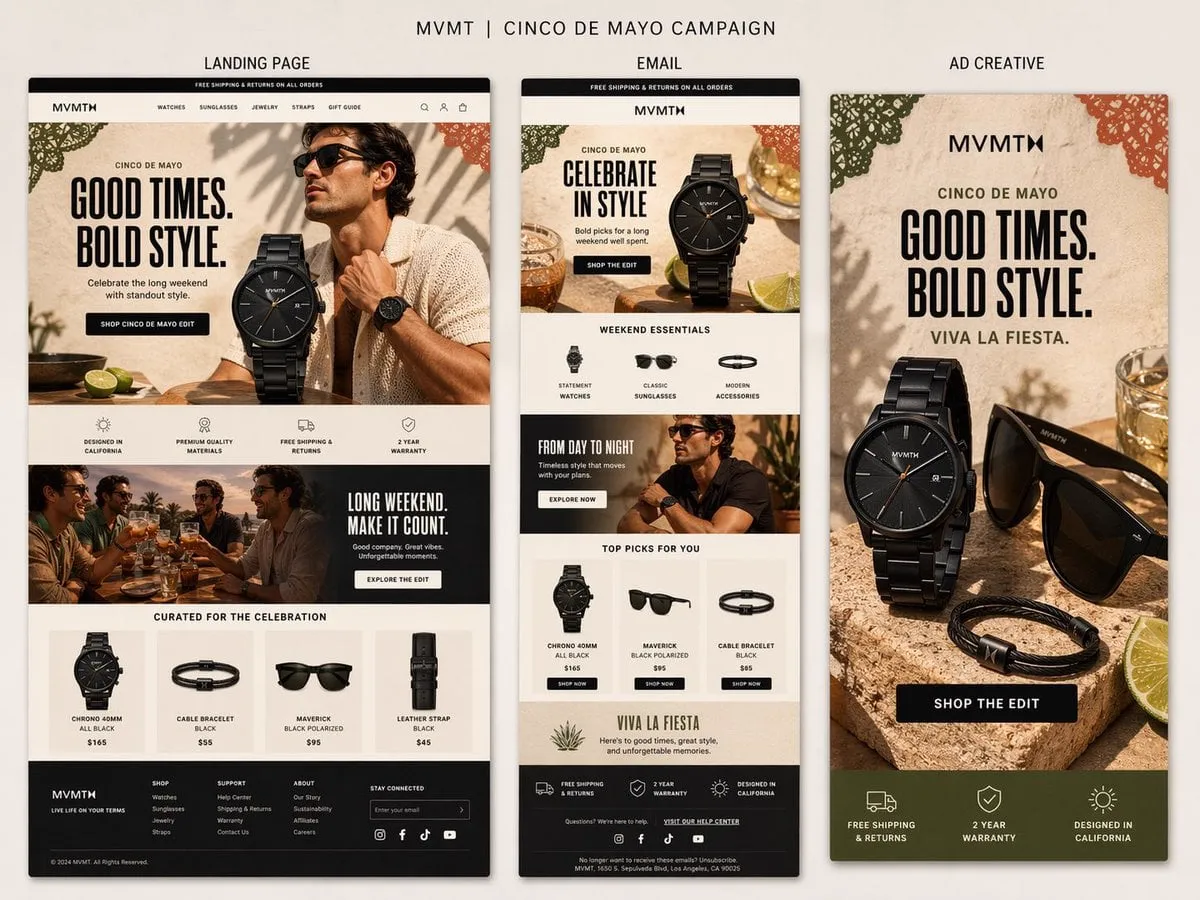
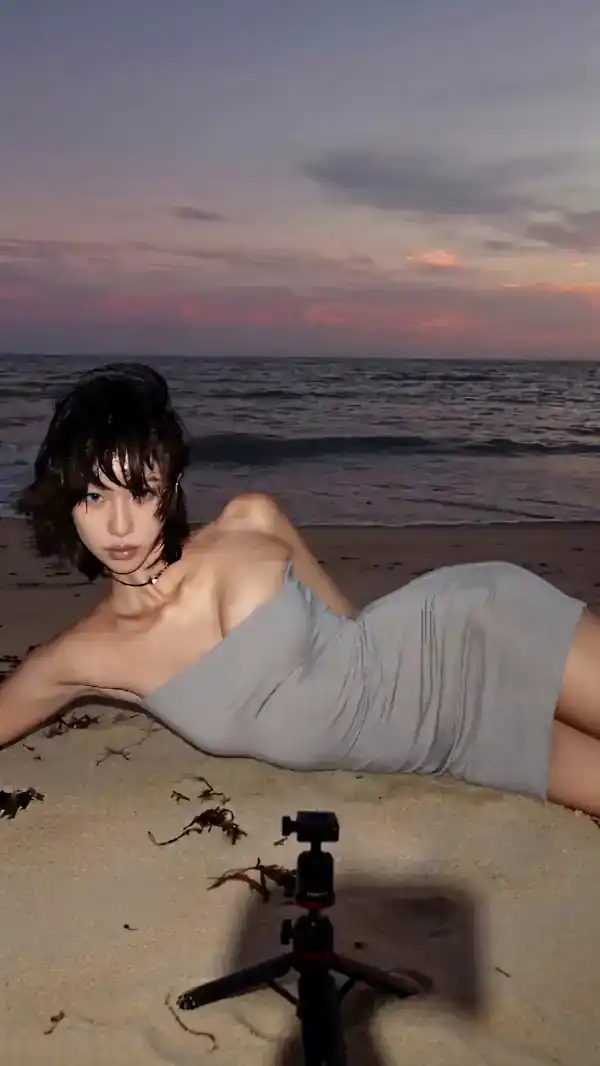
Text-to-video generation has crossed the line from research curiosity to working production tool. A single prompt can now produce a clip with realistic lighting, coherent motion, and a recognizable subject, and the same prompt can be re-run with small changes to explore alternatives. For creators, marketers, and small studios, this changes the basic arithmetic of video production: the marginal cost of a new idea has dropped to almost nothing.
This guide walks through the practical side of the text-to-video era. We will cover how the current generation of platforms is organized, how to choose the right model for a job, what an AI director agent adds to the workflow, and the step-by-step process that turns a prompt into a finished video.
Why Text-to-Video Finally Works
The first text-to-video models were impressive in demos and frustrating in practice. Faces warped, motion stuttered, and small details collapsed. The fundamental problem was that generating a single convincing image is already hard, and generating thirty frames per second of convincing images, with consistent characters and physically plausible motion, is an order of magnitude harder.
What changed is not one breakthrough but a combination of them. Training data got larger and cleaner. Model architectures improved at modeling motion and temporal coherence. And, crucially, the ecosystem moved from single models to platforms that combine many specialized models behind one interface. The result is that the failure modes that defined early text-to-video have mostly been tamed, at least for common use cases.
The practical consequence is that text-to-video is now usable for real work: advertising concepts, social media content, internal pitch videos, music visualization, and even short narrative films. The technology still requires judgment about when to use it and which model to use, but it no longer requires a technical background to operate.
Understanding the Modern Model Library
The current generation of AI video platforms is best understood as a library of specialized tools rather than a single magic box. Each model has its own strengths, and the skill of production is matching the model to the job.
Premium models sit at the top of the library. They are built for projects that need studio-grade quality and fine control. If you are producing a hero asset for a brand campaign, a premium model is usually the right choice. They tend to be slower and more expensive per run, but the output quality justifies the cost when the asset is important.
Budget-friendly models fill the middle of the library. They produce good results for the vast majority of everyday content: social posts, drafts, internal assets, and anything where speed and volume matter more than perfection. Many of them offer surprisingly strong physics and realism for their price point, which makes them excellent for testing ideas before committing to a premium render.
Specialized models cover the edges of the library. One might excel at frame-by-frame control for high-speed action sequences, another at a particular animation style, another at consistent character rendering. These models are not general-purpose, but in their niche they outperform everything else.
The practical takeaway is that there is no single best model. There is only the best model for the specific task in front of you. Teams that keep a mental matrix of model strengths, and update it as new versions ship, consistently produce better work than teams that default to whatever they used last time.
Choosing the Right Model for the Job
Model selection is a decision process, and it helps to make it explicit. Start by asking what the video needs to accomplish. A photorealistic product demo has different requirements than a stylized character animation, and the model choice should reflect that.
Consider the level of realism required. Photorealistic advertising and lifestyle content push toward the high-fidelity end of the library. Stylized content, including anime and illustration looks, has its own specialist models that understand the aesthetic better than a general-purpose engine.
Consider the motion requirements. If the video needs fast action, camera movement, or physical interaction, look for models known for clean motion handling and minimal warping. If the video is mostly static scenes with subtle motion, nearly any model will do, so optimize for cost.
Consider the need for character consistency. If the same character appears across multiple scenes, prioritize models with strong identity retention, or pair a general model with reference-image workflows. Consistency is rarely the default behavior, so plan for it explicitly.
Finally, consider iteration speed. For exploratory work, use the fastest model that gives you a useful signal. Save the premium renders for the final version. This two-stage approach keeps costs low without sacrificing quality where it counts.
How an AI Director Agent Changes the Workflow
One of the most useful developments in the text-to-video space is the emergence of the AI director agent. Instead of a raw prompt-to-clip pipeline, the platform offers an agent that behaves like a director: it interprets your intent, structures the narrative, breaks the project into scenes, and selects appropriate models and parameters for each part.
The value of a director agent is not that it replaces human creativity. It is that it automates the mechanical parts of direction. Writing a detailed shot list for a thirty-second video, deciding which model handles the establishing shot and which handles the close-up, and keeping the visual language consistent across cuts are all tasks that a well-designed agent can handle reliably. The human stays in charge of the vision; the agent handles the logistics.
For newcomers, the director agent also serves as a teaching tool. When you see how the agent decomposes your brief into scenes and prompts, you learn what a good production brief looks like. Over time, you internalize the structure and can write more effective prompts even when you are working directly.
For professionals, the director agent is a productivity multiplier. It removes the low-level choreography from the critical path and lets the creative team focus on the choices that actually move the project forward.
The Architecture Behind Smooth Generation
Underneath the interface, the platforms that work well share a similar architecture. The core is a task queue that manages generation jobs. When you submit a project, the system decomposes it, schedules the generation runs across available compute, and assembles the results. This queuing layer is what allows a platform to serve many users without grinding to a halt, and it is why some platforms feel fast and others feel like a lottery.
Multi-image fusion is the other architectural piece that matters. It lets the system take multiple input images and merge their characteristics into a coherent output. In practice, this is how you keep a character consistent across scenes: you provide reference images of the character, and the fusion mechanism carries those traits into every generation. Without fusion, you are rolling the dice on identity every time.
Understanding the architecture matters because it tells you which behaviors to expect. If a platform is queuing your job behind heavy workloads, you plan accordingly. If it supports fusion, you use references aggressively instead of describing the character in words every time.
Prompt Engineering for Better Video
A good video prompt is a miniature production brief. It should cover the subject, the action, the environment, the lighting, the camera behavior, and the mood. The more precisely you specify these elements, the more predictable the output.
Write the subject first. Be concrete: "a street musician in a leather jacket playing saxophone" beats "a musician on a street" every time. Specific nouns and adjectives constrain the model productively.
Describe the action in a way that implies motion. "Walking through rain at night" gives the model more to work with than "a person in the rain." Motion verbs and temporal cues help the model generate plausible sequences.
Specify the camera. Wide shot, close-up, slow push-in, handheld, aerial, tracking shot: each camera behavior produces a different feeling, and models have been trained on these terms. Use them deliberately.
Set the lighting and mood. Golden hour, neon, overcast, high contrast, soft diffused: lighting is a large part of what makes footage feel cinematic, and it is one of the most controllable aspects of generation.
Finally, add constraints to prevent common failure modes. If you need a specific aspect ratio, say so. If you need no text in the frame, say so. The prompt is your only direct channel of control, so use it fully.
A Step-by-Step Text-to-Video Workflow
Here is a workflow that produces reliable results across most platforms.
Write the brief. One or two sentences describing the video you want, its purpose, and its audience. This is the source of truth for everything else.
Expand the brief into scenes. If the video has a narrative arc, break it into establishing shot, action, and conclusion. Each scene becomes its own generation job.
Write per-scene prompts. Apply the prompt engineering principles above to each scene. Keep characters and settings described consistently across scenes so the outputs stay coherent.
Select models per scene. Use the model matrix to pick the right engine for each job: premium for hero scenes, fast models for transitions, specialists for stylized content.
Provide references. If characters or locations must persist, supply reference images and use fusion features rather than relying on text alone.
Generate and review. Run the batch, inspect every clip for quality, consistency, and failure modes, and regenerate the clips that miss.
Assemble and polish. Cut the clips together, add sound and music, apply color treatment if needed, and export the final video.
This workflow looks like a lot of steps, but most of them are quick. The honest bottleneck is review, because the quality of the output is only as good as the judgment applied to it.
Troubleshooting Common Problems
The subject looks different in every scene. This is the consistency problem. Fix it by building a reference set for the character and using fusion or image conditioning. Text-only consistency is unreliable; images are the reliable anchor.
The motion looks wrong or warped. Switch to a model with better motion handling, or simplify the action in the prompt. Fast, complex motion is the hardest thing for most models, so design scenes that the chosen model can actually handle.
The lighting does not match the mood. Lighting is heavily influenced by prompt wording, but also by the reference images. Provide a reference that has the lighting you want.
The output is technically fine but boring. The problem is usually the brief, not the model. Add a point of view, a specific action, or a stylistic constraint that forces the model to make interesting choices.
Output quality varies between runs of the same prompt. Some models are non-deterministic by design. If you need reproducibility, note the seed or settings used, and keep the prompt stable.
FAQ
Is text-to-video ready for client work?
For many categories, yes, especially when paired with human direction and review. Treat generated clips as raw material, and do the final polish with editorial judgment.
How long does a typical generation take?
It depends on the model and the workload. Fast models can return a short clip in seconds to minutes; premium models can take considerably longer. Plan your batch work around the slower tiers.
Do I need to learn coding to use these tools?
No. The interface is prompt-driven, and the director agent handles most of the technical orchestration. The skills that matter are prompt craft, visual judgment, and workflow discipline.
How much does text-to-video cost?
Costs vary by model and platform, and most platforms price per generation. The practical strategy is to use cheap fast models for exploration and premium models only for final assets.
What is the biggest mistake beginners make?
Writing vague prompts and then being disappointed with vague output. The fix is specificity: subject, action, environment, lighting, camera, and mood. The more constraints you give, the more the model can do for you.
Final Thoughts
The text-to-video era is defined by abundance. The hard part is no longer getting a clip; it is choosing which clip deserves to exist. The creators who thrive in this era are the ones who combine the new tooling with old-fashioned editorial judgment, and who treat prompt craft, model selection, and consistency as real production disciplines.
