
A few years ago, typing a sentence and receiving a coherent video clip felt like science fiction. Today it is a production tool, and the hard part has shifted from "can it generate video" to "which model should I use for this specific job." The answer matters more than you might think, because the leading text-to-video models are not interchangeable. They have different strengths, different weaknesses, and different prices, and using the wrong one for a project wastes both time and budget. This guide compares the models worth knowing in the current generation, and gives you a decision framework for choosing between them.
How to Evaluate a Text-to-Video Model
Before comparing models, you need a vocabulary for what to compare. Six criteria cover almost every decision you will make.
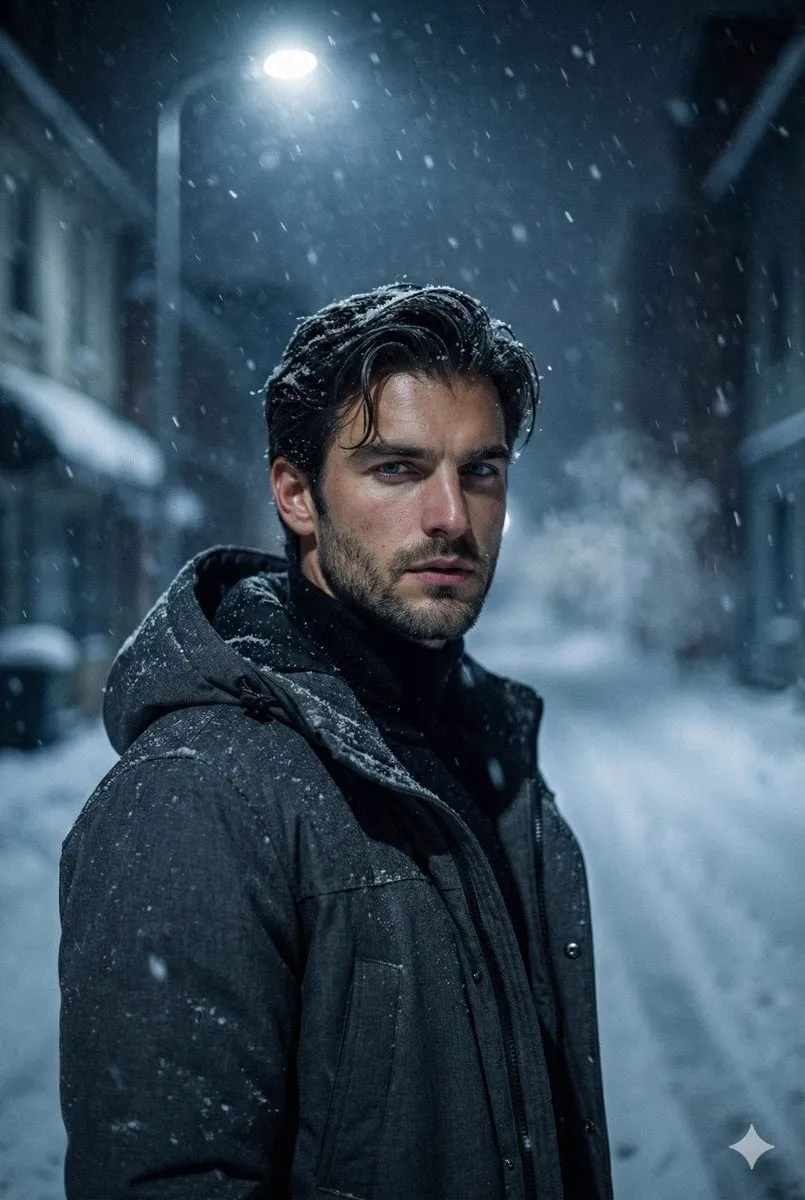
Visual fidelity is how realistic and detailed the output looks: skin texture, reflections, small objects, and overall image quality. Motion quality is how natural movement looks: physics, acceleration, and how bodies and objects behave when they move. Prompt adherence is how faithfully the output follows your instructions, especially negative instructions. Character and scene consistency is how stable identity and environment stay across shots and over time. Speed and cost matter for volume work, because a model that produces beautiful clips at a high price per minute may be the wrong choice for a project with a tight budget. Control is how much you can steer the result: camera moves, aspect ratios, image references, and fine-grained settings.
No model wins on all six. The art is knowing which two or three criteria your project depends on, and choosing accordingly.
The Premium Tier: Maximum Control and Fidelity
The models in this tier represent the current peak of research output, and they typically demand the most from your wallet and your hardware. They earn it when the project needs the best possible quality and the budget exists to pay for it.
Flux Series
The Flux family has built its reputation on style consistency and a non-destructive training approach that keeps the output faithful to the prompt even in long sessions. If your project involves strict visual branding, corporate assets, or a look that must not drift, Flux is a strong candidate. Its control features are generous, which makes it popular for teams that need reproducible results rather than happy accidents.
Runway Gen-4
Runway has been iterating on cinematic quality for years, and the current generation is its strongest. It is famous for object consistency, which means characters and props hold their identity across shots, and for high-quality camera motion. If your project is narrative work with multiple shots of the same scene, Runway is often the safest default. It is also a practical all-rounder for commercial work because it pairs well with image-to-video workflows.
OpenAI Sora Series
Sora is the benchmark for realism and narrative depth. It handles complex scenes, physics, and long-range motion better than most competitors, and it is the model to reach for when a prompt needs a level of natural behavior that other models simplify away. It tends to be the most expensive, and its control features, while improving, still lag the most steerable models. Use Sora when realism is the whole point of the project.
The Specialist Tier: Adherence and Creative Control
The middle of the market is where competition is fiercest, and it is full of models that win specific niches rather than trying to be everything to everyone.
Kling AI Series
Kling is known for strong prompt adherence and a professional feature set. It follows detailed instructions well, which makes it a workhorse for commercial briefs where the client has specific requirements. Its motion handling is above average, and its consistency features have improved steadily. If you need a reliable model that does what it is told across a wide range of jobs, Kling is hard to beat.
PixVerse
PixVerse focuses on granular creative control. It offers fine-grained settings for style, motion, and camera, which makes it attractive to creators who want to dial in a specific look rather than accept whatever the model decides. Its newer versions add better adherence and cleaner motion, and it is a good choice for experimentation because the controls are easy to learn.
MiniMax Hailuo
Hailuo's selling point is efficiency combined with physical realism. It produces natural motion at a fraction of the cost of the premium tier, which makes it an excellent choice for volume work: product demos, social content, and early prototypes. The physical realism of its output punches well above its price point, and it is one of the best value picks in the market.
Motion and Temporal Masters
Some projects live or die by how things move, and a separate group of models specializes in exactly that.
Luma Ray 2
Luma has built its identity around coherent motion and scale. Ray 2 handles large camera moves and complex scene transitions better than most, which makes it a strong choice for establishing shots, environment reveals, and anything where the camera itself is the star. If your prompt is mostly "how the camera moves through the space," Luma is worth testing first.
Pika
Pika integrates image context into video flow exceptionally well. You can feed it a still image and get a video that extends and animates that image naturally, which makes it a favorite for storyboard-to-video workflows and for animating concept art. Its style handling is playful and flexible, and it is a good fit for creative and experimental projects.
Vidu
Vidu stands out for multimodal reference and dynamic animation. It can take multiple reference images and combine them into a coherent animated scene, which is powerful for character-driven projects where you have existing concept art. Its dynamic animation style suits fantasy, action, and character-heavy content.
Open Source and Enterprise Options
The open source tier has quietly become competitive, and it matters for a different reason: control and customization. Tencent Hunyuan Video, together with other open models like Wan and the CogVideoX family, offers respectable quality with the freedom to fine-tune, self-host, and integrate into internal pipelines. The trade-off is setup effort and compute. If you have the infrastructure and the need for full ownership of the output, open source is the only tier that gives it to you. For everyone else, hosted models remain the pragmatic choice.
Matching the Model to Your Project
Here is a decision framework that covers most cases. If you need maximum realism and have the budget, start with Sora. If you need cinematic consistency across multiple shots of the same characters, start with Runway. If you need strict prompt adherence for commercial briefs, start with Kling. If you need style consistency for branded assets, start with Flux. If you are doing volume work on a budget, start with MiniMax Hailuo. If the camera move is the point, start with Luma. If you are animating existing images or concept art, start with Pika. If you need to combine multiple references into one scene, start with Vidu. If you need full ownership and have the infrastructure, evaluate the open source tier.
None of these are exclusive. Professional workflows routinely combine models: one for character generation, one for camera moves, one for finishing. The decision framework is not about loyalty to a single tool; it is about knowing which tool wins the specific job in front of you.
Prompting Tips That Work Across Models
Whatever model you choose, these prompting habits improve results everywhere. Lead with the subject and action, then the setting, then the camera, then the light and mood. Be concrete about physical details: "walking slowly through a narrow alley at dusk" beats "walking through an alley in atmospheric light." Use image references whenever the model supports them, because a reference image transfers more information than ten sentences. Describe the motion in the prompt, including speed and direction, because models read motion words better than implied motion. And always generate a short test before committing to the full prompt, because the cost of a test is trivial compared to the cost of a wasted full-length generation.
Image-to-Video: The Quiet Superpower
Most comparisons focus on text-to-video, but image-to-video is often the more practical tool, and it is the feature that makes multi-model workflows possible. Instead of describing a scene from scratch, you provide a still image, and the model animates it. The still carries the composition, the character design, and the lighting, which means the model has far less to invent and far less room to drift.
The workflow benefit is enormous. You can design every keyframe in an image tool, where you have full control, and then let the video model animate between them. This is how serious productions keep consistency across long sequences: the hard visual decisions are made in stills, and the video model only has to move the pixels believably.
Image-to-video is also the cheapest way to test a style before committing to a full generation. Generate one keyframe, animate it, and evaluate the motion and the look. If the test holds, expand it into the full sequence. If it fails, you have lost one image generation instead of an entire video budget.
A Practical Multi-Model Production Pattern
Here is a concrete pattern that combines the strengths described above, used by teams that ship weekly. First, design the keyframes as stills with an image generation tool, including the character references and the environment plates. Second, animate the hero shots with the model that best fits each shot's requirement: realism for the close-ups, camera motion for the establishing shots. Third, use a budget model for the connective shots, the transitions, and the background plates that no one will scrutinize. Fourth, assemble everything in an editor and grade the whole sequence in one session so the different model fingerprints merge into a single look.
The pattern works because each model does what it is best at, and the still-keyframe step absorbs most of the consistency risk. It also keeps the budget predictable: premium spend is concentrated on the shots that carry the piece, and volume work goes to the cheapest acceptable tool. The result is a production that is faster, cheaper, and more consistent than any single-model pipeline.
FAQ
Which text-to-video model is the best overall?
There is no single best model. Sora leads on realism, Runway leads on cinematic consistency, Kling leads on prompt adherence, and the budget tier leads on value. Choose by project criteria, not by reputation.
Are open source models good enough for client work?
Increasingly yes, especially for controlled, style-specific work where you can fine-tune. The trade-off is setup effort, compute, and maintenance.
How much does text-to-video cost in practice?
Costs vary by model and resolution. As a rule of thumb, budget models cost a fraction of premium models, and the difference in quality is often smaller than the difference in price. Test before you commit a budget.
Can I combine multiple models in one project?
Yes, and it is the recommended approach for serious work. Use the best model for each shot type, then edit the results together with consistent grading and sound.
How do I keep characters consistent across different models?
Build a character reference set and use it in every model that supports image references. For models without references, keep the character description verbatim across prompts.
How often should I re-evaluate my model choices?
At least every quarter, and before every major project. The text-to-video market moves fast, and a model that was mid-tier six months ago may now be the best fit for your requirement profile. Keep a short comparison document with your own test results, because vendor benchmarks and demo reels do not tell you how a model handles your specific style of footage.
Which model is best for short social clips on a budget?
Start with the value tier, such as MiniMax Hailuo, and test it against your actual content. Short social clips rarely need the full realism budget, and the money saved on volume work is better spent on the hero shots that carry the piece.
