


From Paragraph to Picture: What Just Changed
For most of video history, producing a single polished scene required a crew, a location, expensive equipment, and weeks of post-production. A thirty-second commercial could cost thousands of dollars and take a month to ship. The text-to-video shift collapses that entire pipeline into a single step: you describe what you want to see, and a generative model renders moving images that match your description.
That is not a subtle improvement. It is a change in the economics of video. Teams that once needed to triage every idea through a production budget can now prototype dozens of visual concepts in an afternoon. A creator who could never afford a film crew can generate cinematic sequences from a laptop. The barrier between having an idea and seeing it on screen has effectively disappeared, which is why the technology has moved so quickly from novelty to default workflow.
None of this means the craft is gone. The opposite is true: as the mechanical cost of generating video drops, the value of taste, direction, and consistency rises. Knowing what to ask for, how to structure a prompt, which model suits which scene, and how to keep a character recognizable across shots has become the real job. The rest is leverage.
The State of Text-to-Video in 2025
The landscape today is defined by a race in three directions: realism, coherence, and control.
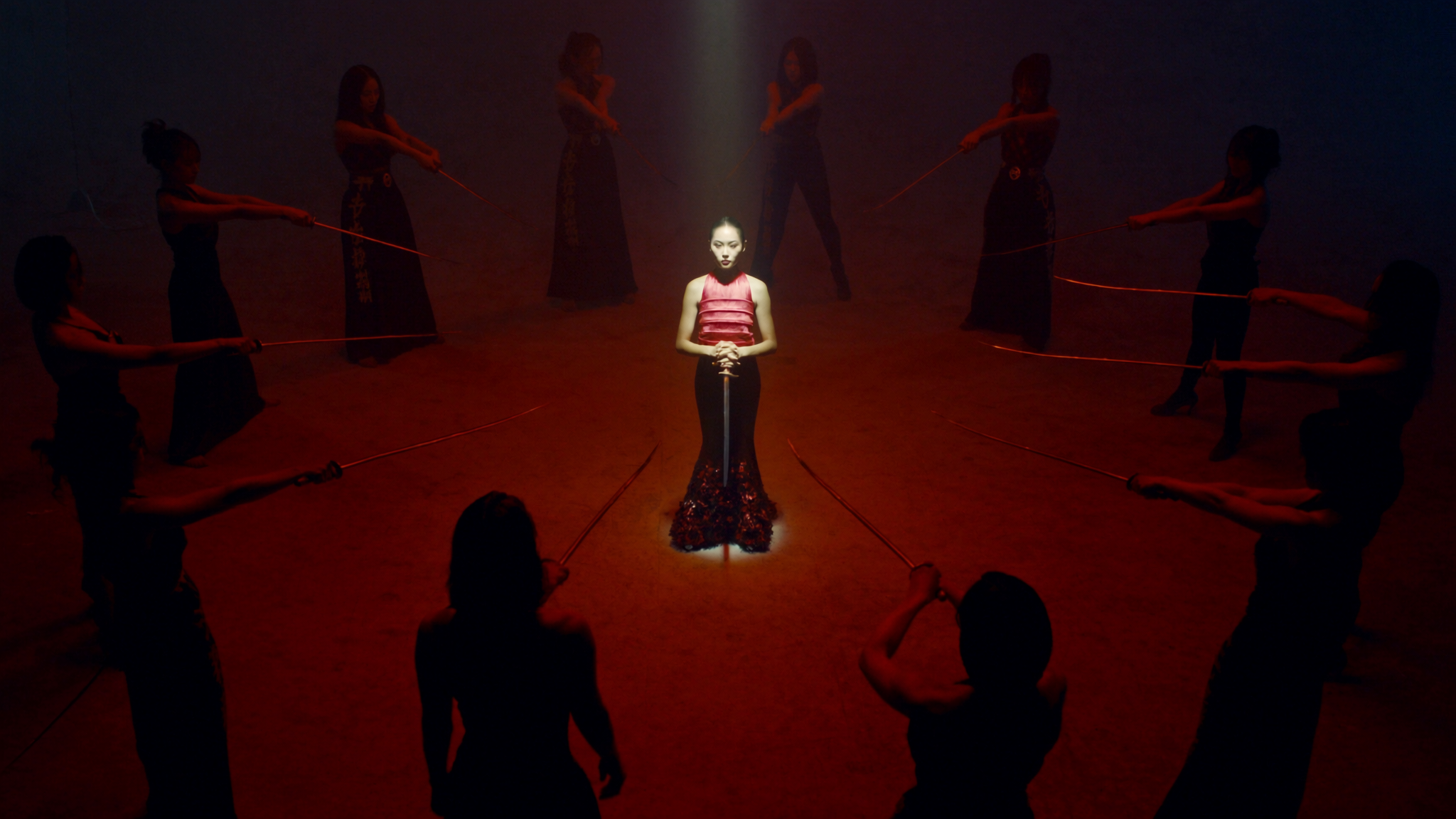
Realism is the most visible. Current generation models produce footage with lighting, physics, and texture that sit close to live-action. Skin, hair, water, and motion blur have all improved dramatically, and for many use cases the output no longer reads as synthetic at first glance.
Coherence is the harder problem. A video is not a single image; it is a sequence of frames that must tell a continuous story. Early models generated beautiful clips that drifted the moment a scene changed. The same character would age between shots, a jacket would change color, a room would rearrange itself. Viewers forgive a single odd frame, but they abandon content that feels inconsistent across ten seconds.
Control is the third axis. Makers do not just want a pretty clip; they want the camera to move a certain way, the lighting to match a brand, the pacing to fit a cut. Modern models increasingly support camera-movement control, lens simulation, and frame-level guidance, which turns generation from a slot machine into an instrument.
The practical result is that text-to-video is no longer a toy for demos. It is a production tool for explainer videos, social content, ad tests, product shots, and even short narrative films. The teams that win with it are the ones that treat it as a craft: they understand what each model is good at, they build repeatable workflows, and they obsess over consistency.
Why This Matters Now
The obvious reason to care is speed. A creative team can go from brief to rendered clip in minutes instead of weeks, which changes what is possible strategically. Want to test five different ad hooks before lunch? Doable. Want to update a training video every time a product changes? Also doable. The production bottleneck that used to force teams to choose one idea has been replaced by iteration.
The less obvious reason is democratization. Filmmaking used to be one of the most capital-intensive creative fields. The text-to-video wave does not remove the need for talent, but it removes the need for capital. A solo creator with a clear vision can now produce work that competes with small studios. That widens the funnel of who gets to make video, which in turn raises the bar for everyone.
The strategic implication is simple: if video is cheap and fast, then the scarce resource is no longer production capacity. It is judgment. Teams that win will be the ones that decide what to make, what to cut, and how to keep a consistent voice across everything they ship.
The Core Technology Behind Instant Video
The speed of modern pipelines rests on layered infrastructure rather than a single magic model. Understanding the layers helps you use them well.
The Power of Choice: Multiple Generation Models
No single model is best at everything. Some models excel at photorealism and are ideal for product shots and lifestyle content. Others are stronger at animation, stylized motion, or handling multiple characters in one scene. Still others prioritize speed, making them practical for high-volume social media work.
Aggregator platforms exist for exactly this reason: instead of learning five separate tools, you get one interface over many engines. That is genuinely useful. You can match the model to the job, compare outputs side by side, and switch engines without re-learning a workflow. The practical advice is to keep a shortlist of two or three models with known strengths rather than trying to use everything.
Character and Style Consistency
Consistency is where most projects fail. A brand mascot, a recurring presenter, or a story character must look the same in every scene, or the audience stops trusting the content. Text prompts alone cannot guarantee this: describe the same person twice and you will get two similar-looking strangers.
The standard solution is reference-based generation. You supply one or more images of the character, and the model uses them as an anchor for identity. The best results come from multiple reference images captured from different angles and lighting conditions, which give the model enough information to extract stable features. This technique, usually called image fusion or multi-image reference, is the difference between content that feels like a series of clips and content that feels like a story.
A Direction Layer on Top of Generation
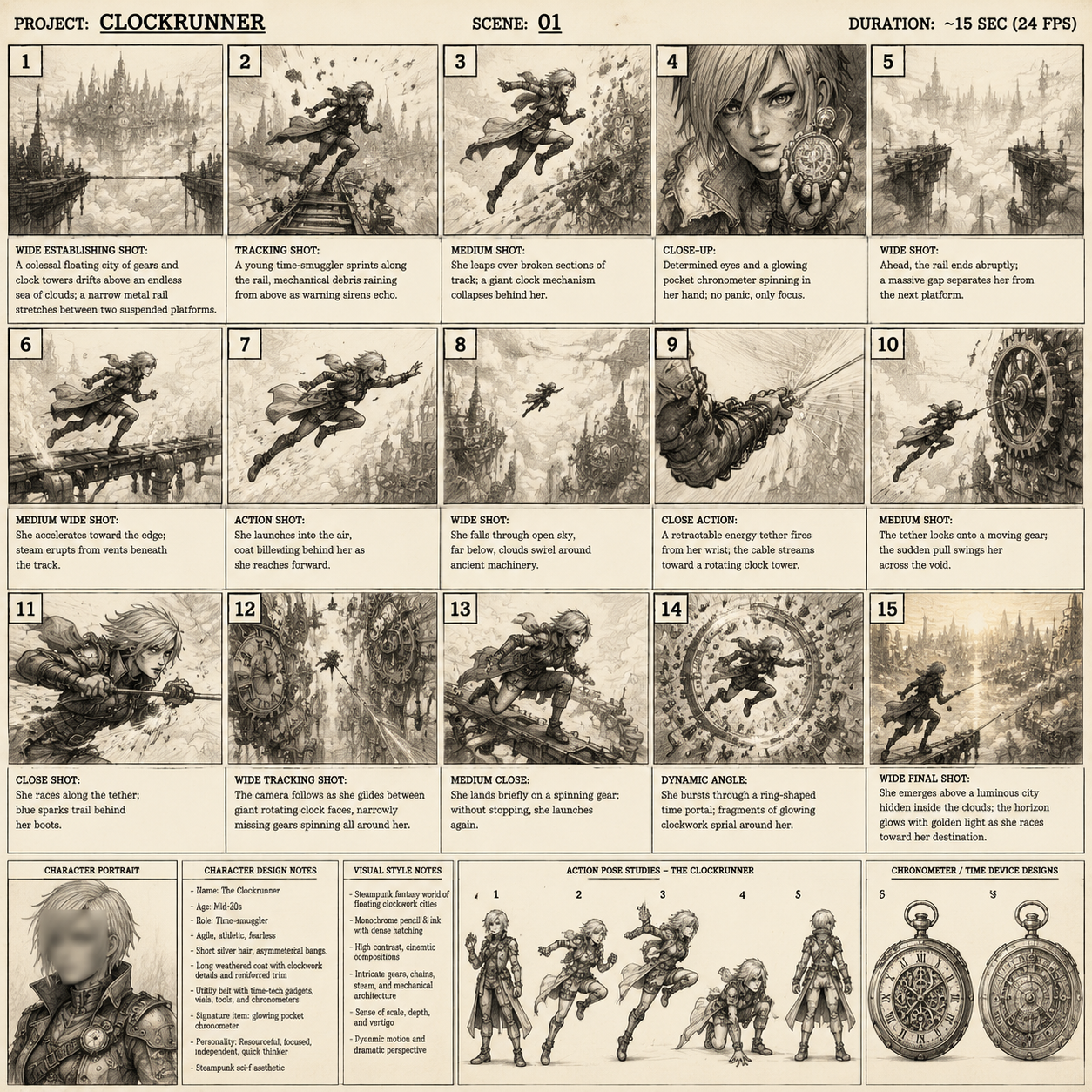
Generation models turn prompts into footage, but someone has to decide what the footage should be. Modern platforms increasingly add a direction layer on top: an agent that reads the script, breaks it into shots, chooses the model for each scene, and keeps style consistent across the whole piece. Think of it as an assistant director that handles the mechanical decisions so the human can focus on creative ones.
This matters because video is sequential. A great single shot is worth little if the next shot contradicts it. A direction layer that plans the whole sequence, tracks the character, and manages style across cuts is what turns isolated generations into a coherent video.
The Architecture That Makes It Reliable
Consumer tools are only half the story. Behind them sits an architecture that makes generation fast, fair, and manageable at scale, and it is worth understanding because it predicts how reliable a platform will be.
A Modular Backend
A well-built generation service is modular: model access, user management, billing, and asset storage are separate services that talk to each other. Modularity matters because models change constantly. When a new engine ships, a modular backend can plug it in without rewriting the whole product. For users, this means the catalog keeps growing without downtime.
Task Queues and Resource Management
Generating video is expensive in compute. A platform that lets everyone render at once would either break or require waiting forever. The practical answer is a task queue: jobs are submitted, prioritized, and processed as GPU capacity frees up. Good queues also fail gracefully, retrying jobs instead of losing them. If you are building automation on top of a generation service, look for one with a predictable queue: it tells you how long a batch will take and whether you can schedule work reliably.
Authentication and Payments
The unglamorous layer matters too. Hosted authentication and payment services handle sign-up, session management, and billing without custom code, which lets a platform focus engineering effort on the actual generation quality. For users, the signal is trust: a service that takes billing seriously is more likely to keep running and to handle failures honestly.
Beyond Text: A Fuller Creative Toolkit
Text is the entry point, but finished videos need more than moving images.
Image processing matters because most real projects start with an existing asset: a logo, a product photo, a character design. Modern pipelines can take that image, understand its style, and use it as the visual anchor for generation, which is far more reliable than describing a logo in words.
Sound is the forgotten half of video. Voiceover, background music, and sound effects often decide whether a clip feels finished or cheap. Tools for AI voice synthesis and music generation have matured to the point where a solo creator can produce a full audio bed without a studio, and syncing audio to generated footage is now part of the standard workflow.
Video fusion is the technique that ties scenes together. By referencing the same character or style across multiple clips, you can cut between shots without the visual drift that plagued early text-to-video. This is what makes multi-scene content possible: the first scene establishes the look, and every scene after it inherits it.
The Creator Economy: Training and Owning Custom Models
The most interesting shift is ownership. In the traditional creator economy, you rent tools: you pay for subscriptions and keep nothing you can resell. The model-training wave changes the equation. Some platforms now let creators train their own custom models on their own characters or styles, then publish those models so others can use them.
This has two effects. First, it makes a character truly reusable: once trained, the model produces the same face, the same outfit, the same art style on demand, with no prompt lottery. Second, it creates a marketplace: a creator who builds a distinctive style can earn from others who want to use it. For professionals, this is worth taking seriously as both a workflow improvement and a new revenue line.
A Practical Workflow: From Idea to Finished Clip
Here is a workflow that works across most platforms and projects.
First, write the concept down as a short brief: what is the scene, who is in it, what is the mood, what is the camera doing? Second, decide on reference assets. If a character or product appears, prepare three to five images from different angles with consistent lighting. Third, pick the model based on the job: photorealism for product, stylized for animation, speed for social batches.
Fourth, write the prompt with structure: subject, action, environment, lighting, camera, and mood, in that order. Fifth, generate the first pass and evaluate against the brief, not against how cool the clip looks in isolation. Sixth, iterate on the weak points: change the model, tighten the prompt, or add reference frames. Seventh, only after the visuals lock, add voiceover, music, and titles.
The discipline that separates good results from bad ones is refusing to ship a clip that is technically impressive but off-brief. Every generation is a hypothesis; the workflow is how you test it quickly.
Common Mistakes and How to Avoid Them
The most common mistake is writing a vague prompt and accepting the first output. Prompt quality is the highest-leverage input you control, and a structured prompt reliably outperforms a sentence of adjectives.
The second mistake is ignoring reference images. If a project involves a recurring character or a brand asset, text-only prompts will never be consistent enough. Set up the reference set before you start generating.
The third mistake is judging clips one at a time. A single frame can look stunning while the sequence drifts. Evaluate scenes in context, cut them together, and watch the whole thing.
The fourth mistake is treating one model as a universal tool. Match engines to jobs, and keep the shortlist small enough that you actually learn each model's behavior.
Frequently Asked Questions
Do I need a powerful computer to use text-to-video tools?
No. Generation happens in the cloud, so a laptop with a browser is enough. The heavy computing is handled by the platform, which is also why most tools charge per generation rather than per installation.
How long does it take to generate a clip?
It depends on the model and the queue load. A short clip can take anywhere from a minute to several minutes. For batch work, plan for the queue rather than expecting instant results.
Can I keep the same character across different scenes?
Yes, if the platform supports reference images or image fusion. Use multiple reference shots of the character and reference them consistently across prompts.
Is AI video good enough for commercial use?
For many use cases, yes, and improving every quarter. Product shots, social content, explainers, and ads are already common commercial applications. For hero cinematic work, treat it as a pre-visualization and finishing tool rather than a replacement for a full production team.
How do I choose between platforms?
Look at model variety, consistency features, queue reliability, and whether you can train or reuse custom models. Test the same brief on two platforms and compare against your brief, not against marketing claims.
