
For most of the history of moving images, the path from an idea to a finished video ran through heavy machinery: cameras, crews, studios, budgets. A sentence in a script could cost thousands of dollars by the time it reached the screen. The last few years have changed that equation at the root. A text description can now become a moving scene in minutes. A static photograph can be set in motion and turned into a moment of cinema. And the gap between what a small team can produce and what a studio can produce has narrowed dramatically.
This article is a practical look at how to turn text and images into finished video with generative tools. It covers the engines behind the scenes, the production pipeline that turns prompts into a coherent film, the discipline of consistency, and the finishing work that separates a demo from a deliverable. Whether you are a filmmaker, a marketer, or a curious creator, the goal is the same: understand the machinery well enough to direct it.
From Static Media to Moving Pictures
The shift from static to moving is the biggest change in content production since the smartphone camera. A single image carries information; a sequence carries emotion. Two frames in a row create the illusion of life, and the brain fills in everything between them with meaning.
Generative video models are trained to produce not single images but coherent sequences. They learn the way objects move, the way light behaves, the way a camera breathes through a scene. The result is that the creator's job moves from capturing reality to describing it: you decide what the audience should see, and the model renders the frames.
The practical consequence is a collapse of the traditional cost curve. Location scouting, set construction, equipment rental, and post-production services still exist, but they are no longer the only path. A writer with a vivid imagination and a clear process can now generate material that would previously have required a production company.
How Modern Video Engines Actually Work
You do not need to understand neural networks to direct generative video, but a mental model of the machinery helps you get better results.
At the simplest level, a text-to-video engine maps your description to a visual world: subject, environment, lighting, camera, mood. The engine interprets every phrase you write, so ambiguous words produce ambiguous images and concrete words produce concrete ones.
An image-to-video engine does something different. It starts from a picture you provide and generates the frames that follow from it. This gives you control over composition from the very first frame: the subject, the framing, and the atmosphere are already fixed before any motion is invented.
The most useful engines accept both. They combine reference images with text instructions, so you can say "animate this character" and add "walking through rain, camera low, slow push-in." The reference anchors the identity; the text directs the motion. The more precisely you understand this split, the more efficiently you can work.
Building a Production Pipeline from Idea to Frame
Raw generation is not a production workflow. A real pipeline has stages, and each stage has a purpose.
Start with a concept document. Write down what the video is for, who watches it, and what should change in the viewer by the end. This document is the filter through which every later decision passes.
Move to a visual plan. Describe the key scenes, the style, the palette, and the camera language. Sketch it in words if you cannot draw. The visual plan is what prevents a project from becoming a pile of pretty but disconnected clips.
Then build the reference library. Generate or collect the images that define your world: the hero, the location, the signature props, the mood boards. Every later shot will be anchored to these references.
Only then do you generate. Shot by shot, following the plan, comparing variants, selecting the strongest. Generation is the execution phase, not the thinking phase. Teams that think during generation produce chaos; teams that think before generation produce films.
Image to Video: Giving Stills a Second Life
The image-to-video path is where many creators find their first professional results, because it offers the most control.
Start with a strong still. It can be a photograph, a rendered illustration, or a generated concept. The still should be sharp, well composed, and clearly lit. Everything the engine does is built on what it sees in that image.
Decide the motion in advance. Do you want the subject to move, the camera to move, or both? A portrait with a subtle smile, wind in the hair, and a slow push-in feels completely different from a locked-off shot of the same portrait with the background flowing past.
Keep the motion honest. The engine invents the in-between frames, so it needs room to do so convincingly. Small, plausible movements succeed; extreme contortions fail. If a scene calls for dramatic motion, break it into smaller beats and generate each one separately.
Use the still as a continuity anchor. When you need the same character in multiple scenes, the still becomes a reference for every new generation. This single habit does more for production quality than any other technique in this article.
Keeping Characters and Worlds Consistent
Consistency is the wall that most generative projects crash into. The same character should look the same in every scene, and the same world should feel like one place. Without a system, every shot re-rolls the dice.
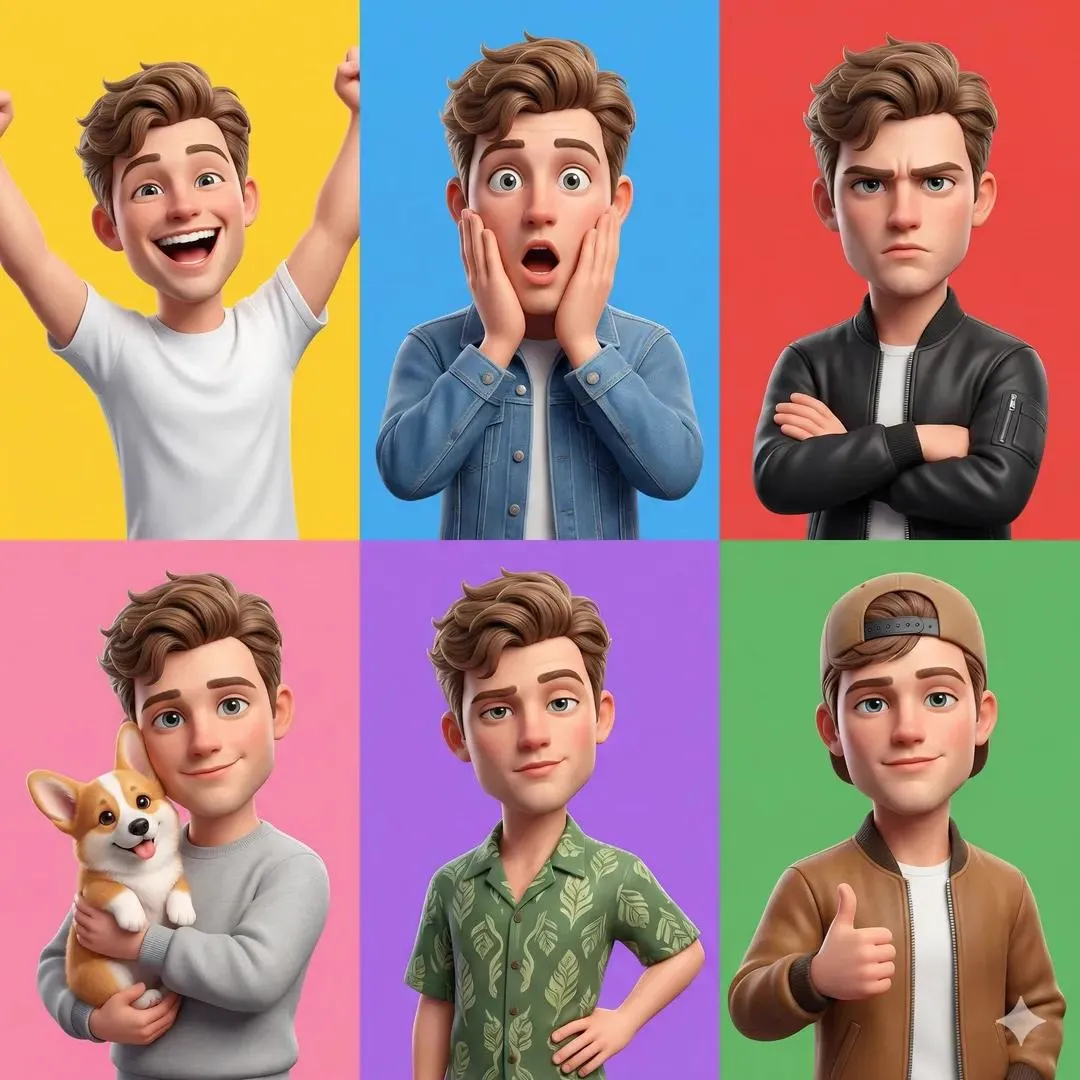
Build a character sheet. Front view, profile, close-up, and a few variations of costume and expression. This sheet defines the identity that every shot must respect.
Build a world sheet. The hero location needs the same treatment: a few establishing images that define its architecture, lighting, and color. When a new scene takes place in that world, the references remind the engine what it looks like.
Prefer engines with strong reference support. Multi-image references, where you feed two or three pictures and the engine derives the identity, are the current standard for production work. Choose tools that handle this well and make it part of every workflow.
Finally, protect the consistency in the edit. Even with perfect references, small mismatches will slip through. The color grade, the grain, and the sound design are what glue the shots together. A unified finish hides small seams; a neglected finish exposes them.
Matching Engines to Jobs
No single engine is best at everything, and pretending otherwise is expensive. Build a shortlist of engines and know what each one is for.
Reach for a high-fidelity engine for hero shots: the moments the audience will remember. These engines produce the best detail, the most natural motion, and the fewest artifacts, and they deserve the largest share of your budget.
Reach for a fast engine for plates and transitions. Backgrounds, fill shots, and throwaway moments need to be good, not perfect. Spending premium resources on them is waste.
Reach for a stylized engine when your project has a strong visual identity. Anime, illustration, retro-futurism, and painterly looks each have engines that understand their language better than any generalist.
And keep an open model or two in your toolbox. Local models are free to experiment with, and they are often the fastest way to test a new style before committing premium resources to it.
Managing Renders Like a Studio
Generative production has a bottleneck, and it is not creativity. It is render capacity. A studio manages this resource deliberately, and you should too.
Plan your render budget before you start. Every shot will be generated several times before one version wins, so estimate the true cost as variants per shot, not shots. Budget accordingly.
Batch aggressively. Group similar jobs and run them together. Idle time between generations is lost time, and batching keeps the pipeline full.
Queue, do not rush. When you submit a generation, move to the next prompt instead of staring at the progress bar. The modern workflow is parallel: prompts in, results out, selection continuous. If your tool offers an API, use it for large batches and save the interface for fine-tuning.
Keep a log of what was generated, with what prompt and what references. When a shot works, you can reproduce it. When a shot fails, you know why. The log turns generation from a lottery into a repeatable process.
A Realistic Example: From Brief to Finished Clip
To make the pipeline concrete, consider a sixty-second brand spot for a small coffee roaster. The brief is simple: communicate warmth, craft, and the morning ritual.
The concept phase produces a two-sentence treatment and a mood board: golden light, wooden textures, steam rising, slow camera movements. The reference library holds three images: the hero cup, the roasting machine, and the barista's hands. The generation phase produces a hero shot of the cup in morning light, a close-up of beans falling, a wide shot of the roasting machine, and a final shot of the barista handing a cup to a customer. Premium quality goes to the hero shots; the fill shots use a faster engine.
The edit assembles the shots in order, a warm acoustic track generated to match the mood sits under the voiceover, ambience of the roastery fills the gaps, and the color grade unifies every frame to the golden palette of the mood board. The whole production, from brief to finished spot, fits in a single afternoon with one person at the keyboard.
The point of the example is not the specific details. It is the sequence: concept, references, generation, selection, edit, sound, finish. The same sequence scales from a sixty-second spot to a ten-minute short, and it is the sequence this entire pipeline is built around.
Sound, Music, and the Final Pass
A video is not finished when the images stop moving. Sound carries half the emotional load, and the final pass is where a collection of clips becomes a piece.
Generate or select music that matches the arc of the piece. A single continuous track is usually stronger than a montage of unrelated cues, because it gives the film a spine.
Layer ambience deliberately. A city scene needs traffic and distant voices; a spaceship needs hum and vents and alarms. Silence in the wrong place feels like a mistake; silence in the right place feels like tension.
Add voice where it serves the story. Modern voice synthesis can deliver narration, dialogue, and character voices with natural pacing and emotion. Use it when a human performance is not available, and treat the voice as a first-class element of the mix.
Finish with a unified look. Color-correct every shot to the same target, add grain or texture that matches the genre, and check the whole film from start to finish at least twice. The final pass is where professional work separates from experiments.
What the Next Generation Unlocks
The current tools are not the end of the road; they are an early chapter. The direction of travel is clear and worth planning around.
Expect longer coherent sequences. The engines are steadily learning to hold worlds together for more frames, which means less cutting around weakness and more sustained storytelling.
Expect deeper control. Camera choreography, lighting direction, and performance specification are moving from text hints to explicit parameters. Directors will get knobs, not just prompts.
Expect better integration with traditional tools. The line between generated material and conventionally produced material is blurring, and editors are beginning to treat generation as another source format alongside footage.
For creators, the strategic implication is simple: invest in skills that survive the model churn. Prompt craft, reference discipline, editing judgment, and sound design will still be the differentiators when today's flagship engines are obsolete.
Frequently Asked Questions
Is text-to-video good enough for commercial use? For many categories, yes. Hero shots from strong engines routinely pass for produced footage. For narrative dialogue scenes, human performance remains essential.
How do I start with image-to-video? Pick one strong still, learn the motion controls of your chosen engine, and iterate. The first results will teach you more than any tutorial.
What hardware do I need? For cloud services, a normal computer is enough. Local models require a serious graphics card and are optional for most workflows.
How do I keep costs under control? Budget by variants, batch your renders, use fast engines for fill shots, and reuse references instead of regenerating from scratch.
Can one person run this whole pipeline? Yes, and many do. The pipeline in this article is designed to be run by a solo creator with discipline: concept, references, generation, edit, sound, finish.
Final Thoughts
The ability to turn text and images into cinema is no longer a laboratory demonstration. It is a production technique with its own craft, its own economics, and its own masters. The tools are only the beginning. The craft lies in the pipeline: thinking before generating, anchoring every shot to references, matching engines to jobs, and finishing with the same care a traditional production would receive. Master that pipeline, and the size of the story you can tell is no longer limited by the size of your budget.
