
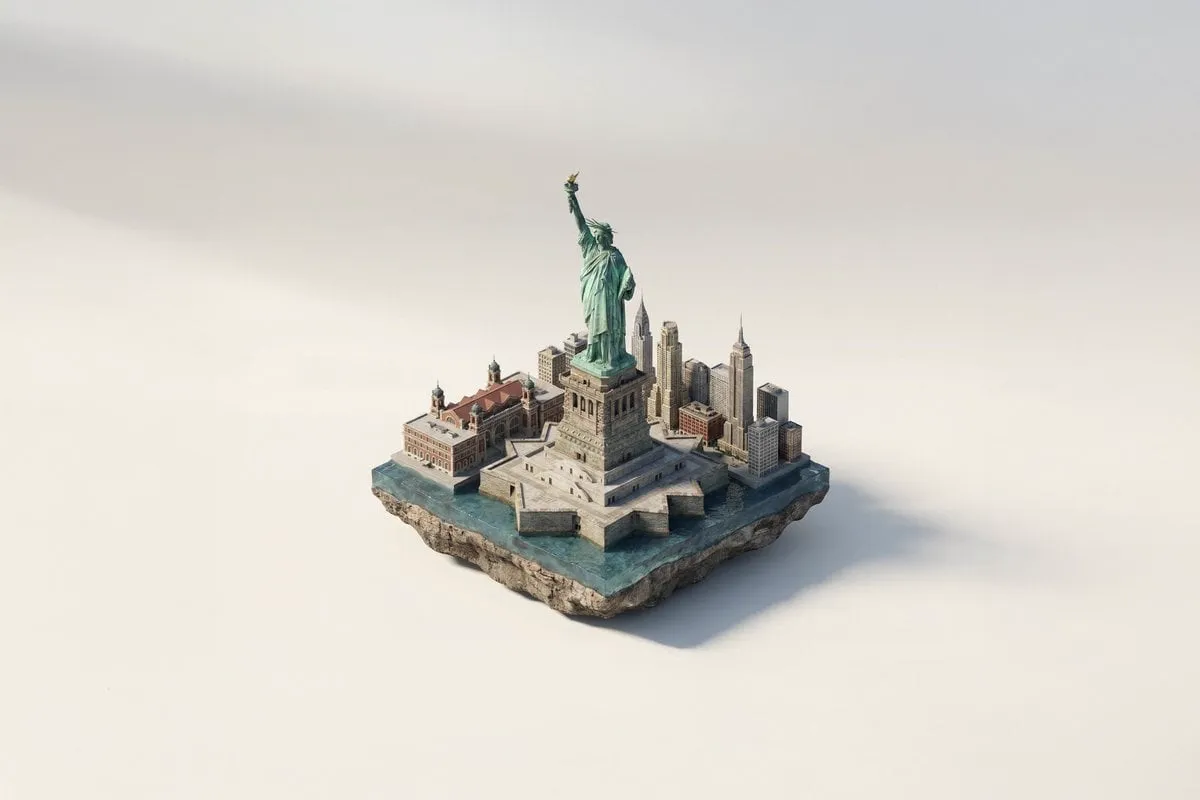


Why Collages and Transitions Matter
Short-form video is the loudest room on the internet, and every viewer has a finger hovering over the skip button. Two techniques decide whether you keep them: how you combine multiple visual elements, and how you move from one moment to the next. A video collage assembles different sources — clips, stills, generated images, graphics — into a single dense composition. Transitions connect those moments with intention, guiding the eye and the emotion rather than just cutting.
In 2025 these are no longer manual crafts reserved for motion designers. AI tools have collapsed the skill barrier, but they have also raised the quality bar: audiences now expect collage work that feels layered and deliberate, and transitions that carry meaning. This tutorial shows you how to plan, build, and finish exactly that kind of work.
What a Modern Video Collage Really Is
A video collage is not a grid of random clips. It is a composition where every element earns its place: a main subject, supporting visuals that add context or contrast, and text or graphics that reinforce the message. Think of it as editorial design in motion.
The most effective collages in short-form content follow a simple structure:
- One hero element that carries the message (a person, a product, a key scene).
- Two or three supporting elements that add texture — a background texture, a reaction shot, a close-up detail, an animated chart.
- Motion hierarchy: the hero moves the most, the supports move less, and the background moves least or not at all.
When the hierarchy is right, viewers know where to look. When every element fights for attention, they leave.
Planning a Collage: Story First
Never open an editor before you know what the collage is saying. The plan is fast and lives on one page:
- Write the one-sentence message. If you cannot say what the viewer should understand in one sentence, the collage will be noise.
- List the beats. Break the message into three to five beats, each with its own visual moment.
- Assign sources. For each beat, decide whether it comes from footage you shot, stock, AI generation, or graphics.
- Sketch the composition. A rough box diagram is enough: where the hero sits, where the supports sit, where text goes, where the eye enters and exits.
This planning step takes fifteen minutes and saves hours of rework. Most failed collages are not failed executions; they are failed plans.
Gathering and Preparing Source Material
The quality of a collage is capped by the quality of its ingredients. Build a source library with three categories:
- Hero footage. Your best shot, the one with the strongest subject and cleanest motion.
- Supporting stills and clips. Textures, close-ups, environmental shots, b-roll that can sit behind or beside the hero.
- Generated elements. AI images and clips that fill gaps: a background texture, a stylized transition object, a graphic that does not exist in real life.
Preparation rules: cut every clip to the exact moment you need, remove shaky or soft frames, and keep a consistent resolution. A collage of mixed resolutions looks broken; upscale the small pieces or crop the big ones so everything shares a base quality.
Generating Elements with AI
AI generation is where collage work gets its superpowers. Instead of hunting for the perfect stock texture or waiting for a specific shot, you generate exactly what the composition needs:
- Backgrounds. Ask for a texture or environment that matches the palette and mood — a grainy studio wall, a neon street, a paper texture, a gradient sky.
- Stylized subjects. Generate a hero element in the style of the piece, then composite your real footage around it.
- Transition objects. Generate the material for a transition — a burst of particles, a swirling portal, a sheet of paper flipping — and use it to bridge two scenes.
The key is generating with the final composition in mind: specify the camera angle, the lighting direction, and the color palette in the prompt so the generated element sits naturally in the collage instead of looking pasted on.
Fusion Techniques: Combining Multiple Sources
The technical core of modern collage work is fusion: blending multiple source images or clips so they share one consistent look. Three techniques cover most needs:
- Reference-guided fusion. Use a reference image to set the style, lighting, and palette for every element. Feed the hero frame as a reference when generating the supporting elements, and the whole collage will feel like one coherent shoot.
- Multi-image fusion. Provide several reference frames — the character, the location, the color grade — so the model locks onto the stable features. This is what keeps a collage series consistent from video to video.
- Compositing with masks. For real footage, use masks and blending modes in your editor. Soft-edged masks, light mattes, and opacity ramps sell the illusion of depth far better than hard-edged rectangles.
Fusion is not about making everything identical; it is about making everything belong to the same world.
Transitions That Carry Meaning
A great transition is not a flourish; it is punctuation. It tells the viewer how to read the relationship between two moments. Match the transition type to the relationship:
- Cut. Same location, same time, new angle. Invisible and fast.
- Match cut. Two visually similar shapes connect — a spinning coin becomes a spinning wheel. Perfect for thematic links.
- Morph. One subject transforms into another. Use it for metaphor: a sketch becomes a building, a face becomes a mask.
- Whip pan and speed ramp. Motion energy carries you across a time jump.
- Particle or object transitions. Generated particles, cloth, smoke, or paper sweep the frame. These are the workhorses of AI-assisted editing.
- Color and light transitions. A flash, a fade to black, or a color wash signals a change in mood or location without any movement at all.
The rule of thumb: if the transition does not help the story, cut. Viewers forgive hard cuts instantly; they never forgive transitions that feel like decoration.
Video-to-Video Transitions
Video-to-video (V2V) work is the most exciting transition technique available now. Instead of mixing between two clips in the timeline, you ask the model to transform the end of one shot into the start of the next. The result is a continuous, cinematic bridge that no amount of traditional keyframing can replicate.
The workflow is simple in principle: render the tail of scene A, render the head of scene B, then generate the in-between with a V2V model using both frames as anchors. In practice, the quality depends on how well you define the anchors. Provide sharp, well-lit frames, keep the subject in a similar position across the transition, and specify the effect you want — a slow morph, a particle dissolve, a camera push.
V2V transitions shine in product reveals, character transformations, and any sequence where you want the audience to feel the change rather than just see it.
Multi-Reference Techniques for Longer Sequences
Once you have a single great transition, the next step is chaining them. Multi-reference workflows let you maintain consistency across an entire sequence, not just one bridge. The technique: build a reference set for every recurring element — the character, the location, the style — and reuse that same set for every clip in the sequence.
This is what separates a collage that looks like five unrelated clips from one that looks like a short film. The reference set is your creative anchor; every generated frame returns to it, so the audience never experiences visual whiplash.
Step-by-Step: Building a Collage with Cinematic Transitions
Let us walk through a concrete example: a 30-second brand story built from a hero clip, two AI backgrounds, and three transitions.
Step 1 — Plan. Message: "Our product turns chaos into order." Beats: chaos, the product, the order. Sketch: hero product center, chaos textures left, clean background right.
Step 2 — Prepare sources. Cut the hero product clip to ten seconds. Export the best frame as a reference image.
Step 3 — Generate. Generate two backgrounds: a chaotic textured background and a clean minimal one, both using the hero frame's palette. Generate a particle burst for the center transition.
Step 4 — Assemble. Timeline: chaos background (5s), particle transition (2s), product hero (10s), clean background (5s), end card (8s). Layer the hero clip over the clean background with a soft mask.
Step 5 — Fuse. Run the assembled cut through a style pass using the reference frame, so the generated backgrounds and the real footage share one grade.
Step 6 — Finish. Add captions, a tight music bed, and a final fade. Review once, fix the three worst frames, export.
Total time for a prepared creator: under two hours, most of it unattended generation time.
Common Mistakes to Avoid
- Overloading the frame. If every element is loud, nothing is. Cut one element per beat.
- Hard-edged compositing. Visible rectangle edges destroy the collage illusion. Soft masks or generated fusion every time.
- Transitions that mean nothing. If the transition does not serve the story, use a cut.
- Inconsistent grade. Mixed color temperatures between clips scream "assembled." One style pass fixes this.
- Skipping the reference set. Consistency is impossible without anchors. Build the reference set before generating, not after failing.
FAQ
Do I need a powerful computer for this?
Not for the AI parts — generation runs in the cloud. A mid-range laptop handles the editing and compositing fine. Heavy 4K work benefits from more RAM and a discrete GPU, but it is not a barrier to entry.
How long does a collage take to produce?
With a plan and a prepared source library, a 30-second collage is a two-hour job, most of it queue time. The first few take longer because you are building the plan and reference habits.
Can I use this workflow for client work?
Yes, and it scales well. The reference set and style pass are exactly what clients want: consistent, on-brand output delivered fast. Just budget review time for the client to give feedback on direction, not on every frame.
What if I only have phone footage?
Phone footage works fine if you stabilize it, cut it tight, and match its grade to the generated elements. The collage structure — hero, supports, hierarchy — matters more than the camera.
Is AI-generated collage content safe to publish?
For your own original concepts and licensed sources, yes. Follow the terms of the tools you use, and for commercial work keep a record of your sources and generation settings.
Tool Recommendations by Stage
- Planning and storyboard. Use any text-to-image generator for storyboard frames. Generate one reference image per beat; consistency at this stage comes from writing the same style block into every frame prompt.
- Element generation. For backgrounds, textures, and transition objects, use image generators with strong style control. Generate in the palette of the project so compositing is easy.
- Video generation. Use video models with keyframe or multi-reference features for the hero clips and the V2V transitions. The anchor frames you define are the difference between a guided shot and a gamble.
- Editing and compositing. Any modern editor with masking, blending modes, and auto-captions handles the assembly. Speed matters more than features for short-form work.
- Audio. A music bed with a clear beat and one or two well-placed sound effects complete the rhythm. Cut to the beat, not after it.
FAQ: More Answers
Can I use these techniques with phone-only production?
Yes. Shoot the hero footage on the phone, generate the backgrounds and transitions in the cloud, and assemble in a mobile editor. The structure matters more than the camera.
How do I know when a transition is good enough?
Watch the sequence without sound. If the transition reads clearly — the viewer understands the relationship between the two moments — it is good enough. If you have to explain it, redo it.
Final Thoughts
Collages and transitions are the grammar of modern short-form video, and AI has made the grammar learnable. Plan the message, gather strong ingredients, generate what is missing, fuse everything into one world, and let every transition earn its place. The tools change every quarter, but the discipline — story first, consistency always — is what actually makes viewers stay.
