
What Makes a Video Spread
Viral is not a genre; it is a property of attention. A video spreads because, within the first seconds, it gives a viewer a reason to stay, a feeling to share, or a comment to post. The algorithm amplifies what the audience already chooses to watch, so the actual game is not beating the algorithm; it is building a video that people physically want to watch more than once and send to someone else. AI changes the economics of this game: you can test far more concepts, far faster, than a traditional production team, which means the winning strategy is volume of good ideas plus ruthless selection, not a single perfect shot.
This guide is about making viral AI videos from the raw materials almost everyone already has: still images and text. You will learn how to turn a static asset into a moving hook, how to use AI to keep characters and worlds consistent across the whole piece, how to write prompts that produce shareable moments instead of generic clips, and how to structure a testing loop that finds winners before you spend real production effort on them.
From Still to Motion: the Hook
The hook is the first one to three seconds, and in short-form video it decides everything. The most reliable way to build a hook with AI is to start from a still that is already striking: a strange scene, a beautiful face, an impossible combination, a moment frozen mid-action. A strong still compels the eye, and animating it adds the second ingredient that stills lack: motion, the promise that something is about to happen.
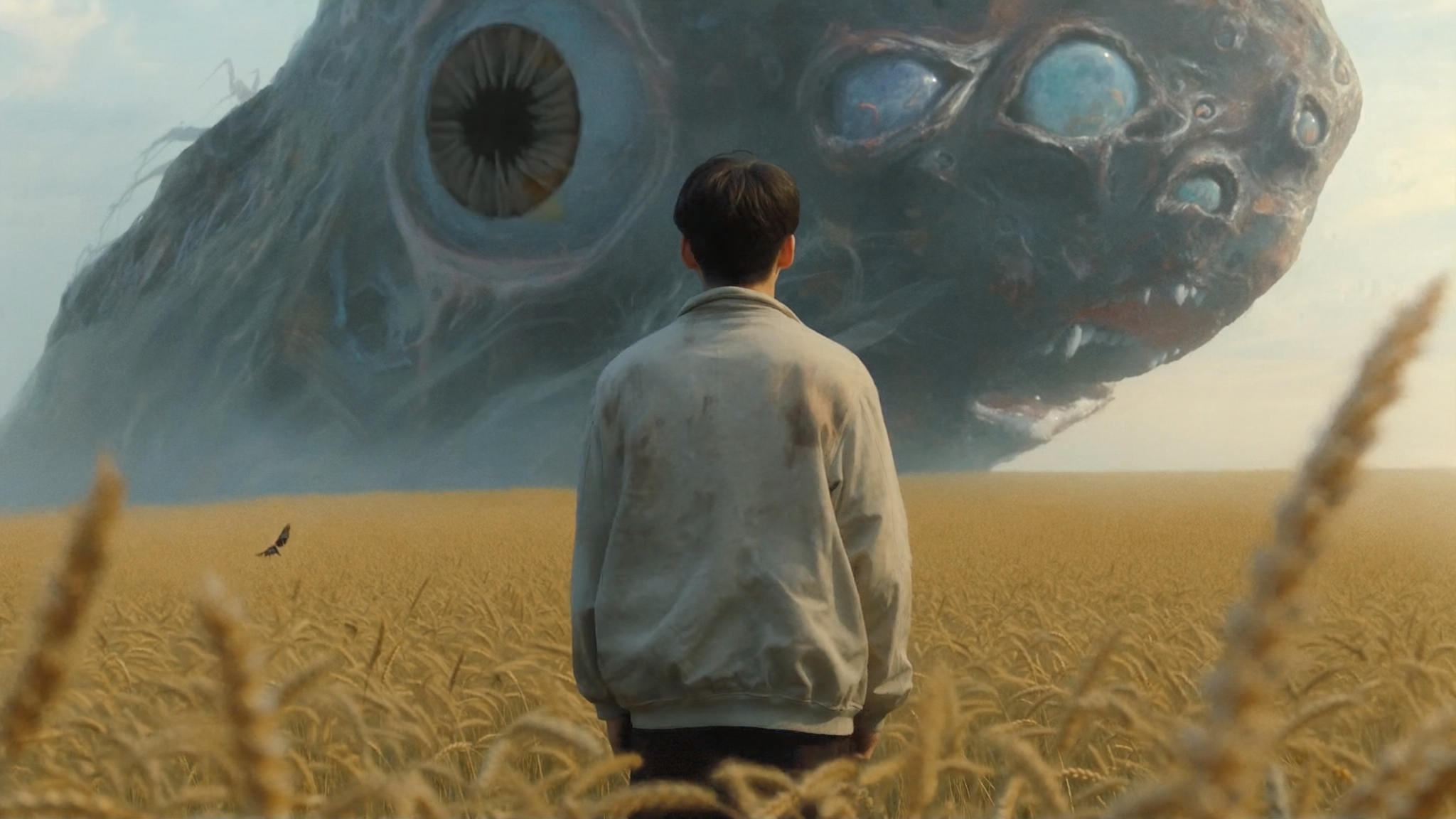
When you animate a still into a hook, the motion should escalate, not decorate. If the still shows a person mid-jump, the motion should complete the jump, not just sway. If the still shows a surreal landscape, the motion should reveal depth, a creature moving, a cloud crossing, a light switching on. The prompt for the hook should describe the first action clearly and keep everything else simple, because the viewer's brain needs one thing to lock onto. Test three or four animated variations of the same still and pick the one that feels like it wants to continue.
Character Consistency as Trust
Audiences forgive many production flaws, but they do not forgive a protagonist who changes face every few seconds. Consistency is trust, and trust is what turns a one-off watch into a follow, a share, or a series binge. AI gives you two ways to earn that trust: reference images and deliberate design.
Build a character reference sheet before you start: several consistent stills of your main figure from different angles and expressions. Use those references in every scene where the character appears, whether you are animating a still or generating from text. When the character changes, change the reference on purpose and make the change readable to the audience, a new outfit, a new hairstyle, a new location. A character who evolves deliberately is a story; a character who drifts is a bug.
Text That Expands the Story
Text is the second raw material, and its role is not to describe the picture but to expand it into narrative. A still gives you a moment; text gives you the before and after. The most effective viral AI videos combine a visual anchor, the striking image the viewer recognizes, with a narrative expansion, the text that tells them why this moment matters, what happened next, or what could happen if the scene continued.
Write the text as a scenario, not a caption: who is in the scene, what do they want, what obstacle just appeared, what is about to happen. Models with strong narrative understanding turn this kind of input into sequences that feel motivated, with cause and effect instead of random movement. Keep the scenario short enough to hold one idea, because a prompt that asks for three plot beats will deliver none of them well.
Matching Models to Short-Form Platforms
Different platforms reward different motion signatures, and your model choice should match the platform you are targeting. For fast, punchy vertical video, you want models that iterate quickly and render movement crisply, because the hook must read even on a small screen with sound off. For atmosphere-heavy pieces, you want models with strong cinematic output, because the mood carries the video. For character-led content, you want models with strong reference handling, because consistency is the whole product.
Practical rule: choose one primary model per platform strategy, learn its behavior on your content, and keep a fast iteration model for testing hooks. Do not chase the newest release mid-project; a model you know is worth more than a model that might be better.
Hooks, Pacing, and Retention
Retention is the metric that decides whether a video gets pushed, and pacing is the lever that moves it. Short-form pacing lives in the first three seconds, the pattern interrupt, and the payoff. The pattern interrupt is the moment where the video becomes unexpected, usually at the point where the AI reveal, the transformation, or the twist lands. The payoff is the moment that justifies the watch, the completed motion, the revealed scene, the satisfying loop.
Build your video to hit all three in sequence: hook, interrupt, payoff, then loop. The loop matters because repeatable content, a format viewers can imagine being remade or rewatched, generates more of both views and comments. When you review your own drafts, watch without sound, on a small screen, in the first three seconds, and ask whether the video would earn a second of anyone's attention.
Iteration: Testing Concepts Fast
The single biggest advantage AI gives creators is cheap iteration, and the creators who win are the ones who actually use it. Instead of polishing one concept for a week, generate several concepts in a day, at low resolution and low cost, and test them against a fixed scorecard: does the hook read instantly, is the motion clean, does the character hold, would you share it. Kill the losers without guilt and double down on the winners by rendering them at full quality.
Keep a concept library. Every idea, prompt, still, and failed test goes into it, tagged by what worked and what did not. Over time, this library becomes a personal engine of formats that your audience responds to, and your hit rate improves with every project instead of resetting to zero.
Repurposing and Series Building
One viral video is a lucky moment; a repeatable format is a business. The professional move is to turn a winner into a series: same character, same structure, same delivery, new scenario each episode. Series content trains the audience to expect you, and the algorithm learns to recognize your returning viewers. AI makes series production realistic for a solo creator, because the reference sheets, style definitions, and prompt templates you built for the first episode carry directly into every later one.
Repurposing is the other multiplier. A single well-made AI video can become a vertical cut, a horizontal cut, a silent version with captions, a trailer, and a still-image campaign, each aimed at a different platform. The generation is the expensive part; the cuts are nearly free. Build repurposing into the workflow from the start, and one winner pays for many platforms.
Platform-specific adaptations
The same AI video must be shaped differently for each platform, because each platform has its own attention grammar. Vertical feeds reward a hook that lands in the first two seconds, captions that read without sound, and loops that survive three watches. Desktop-first platforms reward wider framing, slower pacing, and a story that can carry a longer watch. Reels and Shorts tolerate fast cuts and aggressive music; a documentary feed wants breathing room. The mistake is making one cut and publishing it everywhere, which guarantees it fits nowhere well.
Build platform adaptation into the workflow instead. Design the core scene for the primary platform, then derive the other versions from it: a vertical cut with tighter framing, a silent version with burned-in captions, a wider cut for desktop, a teaser that ends on the payoff, and a still-image campaign from the strongest frames. Because the generation is the expensive part and the cuts are cheap, adaptation multiplies the value of every approved scene. The version that fits the platform is the version that gets watched, and watching is the only signal that matters.
Analytics and learning from the audience
The testing loop does not end at publish; it continues in the data. Watch time, completion rate, shares, and comments tell you what actually worked, and the numbers regularly contradict your taste. A concept you loved may die in the first three seconds; a throwaway test may become your best performer. The professional response is to record the results, tag them to the concept and the format, and let the pattern accumulate.
Keep a simple scoreboard: for each video, note the concept, the hook style, the model used, the retention curve, and the comments. After a few dozen videos, patterns emerge, which hooks hold, which formats loop, which characters your audience wants to see again, and those patterns are worth more than any single viral hit. The goal is not to predict virality; it is to stop repeating failures and start doubling down on the formats the data keeps rewarding. A series built from audience data is a machine, and a machine is what turns luck into a channel.
The scoreboard also sharpens the creative instinct itself. Once you see, in numbers, which first three seconds held and which died, your own taste recalibrates: you stop guessing what will work and start recognizing the shape of a hold. This is why the best viral creators rarely chase trends; they run formats they have already proven and let the data pick the variations. Comment sections are the richest free research on the platform, so read them like focus groups: the reactions, the questions, the requests, tell you exactly what to make next. When the audience tells you what they want, the next iteration is not a gamble, it is an order.
FAQ
How long should a viral AI video be? For short-form platforms, as short as the idea allows, usually fifteen to forty-five seconds, with the hook in the first three seconds.
Do I need a huge budget for AI video? No. Start with a fast, cheap model for testing and reserve premium renders for the concepts that pass your scorecard.
What if my character changes between clips? Fix the references first. Consistent stills fed into every scene solve most drift, and simplifying the prompt solves the rest.
How many concepts should I test? As many as the pipeline allows, but a structured ten per week beats a desperate one per day, because selection quality matters more than raw volume.
Should I post the same video everywhere? Only after adapting it. One master cut plus platform-specific versions beats the same file everywhere, because each platform rewards different pacing and framing.
How do I know if a concept is worth a series? Publish it twice with different scenarios and compare retention and comments. If the second holds the audience, build the series; if it dies, move on.
What is the fastest way to improve my hit rate? Build the concept library and the scoreboard, then let the data tell you which formats to repeat. Taste picks the first winner; the system produces the next hundred.
Should I worry about AI detection or platform policies? Short answer: follow the rules of each platform and disclose what the rules require. Policies differ and change, so check them before you build a strategy around a loophole. The durable approach is the same as in any content business: original concepts, clear rights, and a format the audience actually values, because a channel that depends on evading detection is one policy update away from zero.
Can one person really run a whole viral channel with AI? Yes, but only with a system: references, templates, a testing loop, and a series format. The tools are multipliers; the system is the actual product.
