
Viral video is not luck. It is the outcome of a repeatable system that combines the right content, the right quality bar, and the right production speed. The tools have changed, but the underlying mechanics have not: the audience rewards content that stops the scroll in the first two seconds, holds attention through a coherent story, and looks good enough to feel professional.
Generative AI has made the cinematic quality bar accessible to everyone, which is why the current wave of viral content is dominated by AI-assisted creators. This guide explains the system behind that wave: how to build a photorealistic foundation, how to use narrative models for coherence, how to manage cost at volume, and how to organize a production loop that keeps shipping.
Why Cinematic Quality Drives Virality
The attention economy is brutal. Platforms show hundreds of videos per session, and the decision to keep watching is made in a fraction of a second. Content that looks amateurish is filtered out before the idea even registers; content that looks cinematic earns a second look, and the second look is where the hook lands.
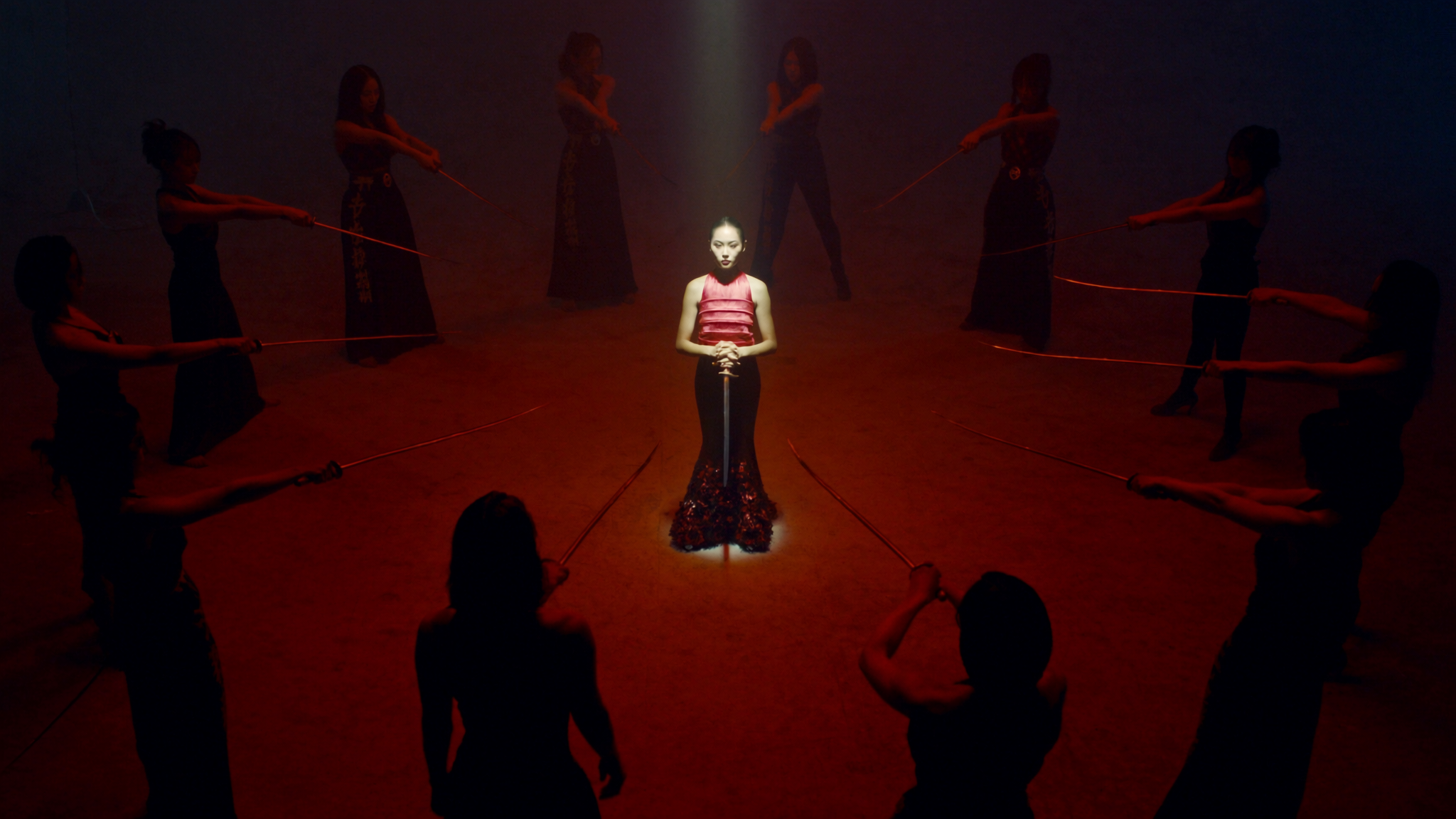
Cinematic quality is a bundle of cues: lighting that feels intentional, motion that feels physical, color that feels graded, and sound that feels real. Audiences cannot name these cues, but they respond to them instantly. The neural shortcut is simple: quality signals credibility, and credibility signals something worth watching.
The second reason quality matters is algorithmic. Platforms optimize for watch time and completion rate, and high-quality content systematically outperforms on both. A video that looks good gets watched longer, gets shared more, and gets pushed to more viewers. The algorithm is not rewarding beauty; it is rewarding the attention that beauty captures.
The practical consequence is that quality is not vanity. It is the cheapest reliable way to buy attention, and AI has made it cheap enough to use on every video, not just the hero pieces.
Building a Photorealistic Foundation
The first layer of the viral system is the model stack. Photorealism is the default expectation of audiences on most platforms, and it is the safest starting point for content that needs to feel real.
The photorealistic workhorses are the flagship generation models: the families known for high fidelity, strong prompt adherence, and the ability to produce believable people, environments, and lighting. For most creators, the winning move is to standardize on one or two of these families for the main content, and to learn their behavior deeply rather than sampling every model on the market.
A photorealistic foundation also means controlling the details that break the illusion. Faces must stay stable, hands must stay correct, and physics must behave. The current generation of models handles these well in common situations, but the creator still needs a review pass that looks for the specific failure modes.
Finally, the foundation includes the environment. Consistent lighting across clips, a coherent color grade, and a believable world make the difference between a demo reel and a series. Decide the look once, document it, and apply it to every clip.
Narrative Power: Coherence Across the Long Form
The second layer is narrative coherence. A viral video is rarely a single shot; it is a short story with a setup, a payoff, and an emotional register. The models that understand narrative, that respect cause and effect and keep characters and objects consistent over time, are the ones that make this possible.
Long-form narrative generation has become the frontier of the field. The leading families in this space produce video that respects the logic of a scene: a glass that was broken stays broken, a character who walked in from the left keeps that spatial history, and actions have consequences within the clip. This matters because audiences are unforgiving of continuity breaks, even when they cannot articulate what felt wrong.
For creators, the practical skill is writing for coherence. Keep the scene simple enough for the model to hold together, keep the character's identity anchored with references, and keep the action legible. A small story told cleanly beats a big story told sloppily.
The director-level tooling helps here. An AI director agent can decompose a brief into scenes, keep the style consistent across them, and assemble the piece, which is exactly the coordination that narrative content requires.
Cost-Efficient Models for High Volume
The third layer is economics. Virality is a numbers game: the more content you ship, the more chances you have to catch a wave, and the more data you collect about what works. Cost per clip determines how many shots on goal you get.
The efficient tier of the model library exists for exactly this reason. These models deliver solid cinematic quality at a fraction of the flagship cost, with the trade-offs concentrated in the details that matter less at small screen sizes and fast cut speeds. For social-first content, the efficient tier is often the right default.
The production pattern is two-stage. Explore and iterate on the efficient tier, where experiments are cheap and fast. When a concept shows promise, promote it to the flagship tier for the final render. This keeps the average cost low while concentrating the premium spend where it produces the most value.
The strategic benefit is volume without bankruptcy. A creator who can afford to test fifty concepts a month learns the audience faster than a creator who can afford five, and that learning compounds.
Using an AI Director for Consistent Production
Consistency is the hidden requirement of a viral channel. The audience returns for a recognizable voice, and that voice includes the visual identity: the same style, the same character, the same grade, the same energy.
The AI director agent is the tool that enforces this consistency at scale. It takes the production brief, applies the channel's style rules, selects the models, and produces the scenes with a uniform hand. The creator sets the vision; the agent handles the thousands of small decisions that keep the output coherent.
The director also solves the handoff problem. When a channel grows, more people join the production, and each person needs to reproduce the same look. A documented style system, encoded in the director's configuration, makes that possible. The look stops living in one person's head and starts living in the system.
The practical implementation is a production bible: the character references, the palette, the camera vocabulary, the model choices, and the review checklist. The director agent applies it; the human approves it.
Mixing Models for Maximum Consistency
No single model does everything, and the smartest production systems exploit this by mixing models deliberately.
The pattern is to assign each layer of the production to its specialist. One model generates the hero scenes with maximum fidelity. Another handles the transitions and establishing shots with good-enough quality at better cost. A third handles the stylized moments that need a specific aesthetic. The fusion mechanism keeps the layers consistent by carrying references across the whole pipeline.
The risk of mixing is drift: each model has its own idea of the character, the light, and the color. The mitigation is the anchor set. Keep the same references everywhere, keep the same descriptive language, and grade the final output in one pass so the color story holds together.
Mixing also protects against dependence on a single provider. If one model family degrades or reprices, the production system can re-route through the alternatives without starting over.
Real-Time Trends: Speed as a Strategy
Viral content is often time-sensitive. A trend, a meme, a news event, or a platform feature shift creates a window of attention, and the creators who fill that window win the traffic. Speed is therefore not a luxury; it is the core strategy for trend-driven channels.
The efficient tier of models exists partly for this reason: when a trend breaks, you need a clip in minutes, not hours. A pre-built prompt library, refreshed continuously, lets the team respond to trends with consistent quality instead of starting from scratch each time.
The system for trend response is simple. Monitor the platform and the topic space constantly. When a trend emerges, run the concept through the prompt library, generate the clip on the fast tier, review against the style checklist, and publish within the window. The whole loop can run in under an hour with practice.
The discipline that separates serious channels from casual ones is that the trend loop runs on a schedule, not on inspiration. The system is always ready, which means the opportunity is never missed.
Building a Repeatable Viral Workflow
Putting it together, the viral cinematic system has six stages.
Brief: define the hook, the story, the platform format, and the metric.
Concept: pull from the prompt library, adapt to the topic, and write the scene prompts.
Generate: run the scenes on the appropriate tiers, using the anchor set for consistency.
Review: check against the production bible, mark failures, and re-run what misses.
Edit: assemble, add sound and music, grade the color, and export for the platform.
Measure and learn: feed the performance data back into the library and the bible.
The loop is ordinary, and that is the point. The system wins through repetition and learning, not through a single magical video. Each cycle adds data, and the data improves the prompts, the model choices, and the instincts of the team.
Case Study: A Channel Built on One Aesthetic
To make the system concrete, consider a channel that publishes cinematic street-style videos every week. The channel defines its aesthetic once: a recurring character, a night-time palette, a handheld camera vocabulary, and a three-scene story structure.
The production bible is written once and reused. Every episode starts from the same references and the same style rules, so the episodes accumulate into a recognizable series instead of a random collection.
The trend loop runs continuously. When a topic spikes, the team pulls a relevant concept from the prompt library, generates the clip on the fast tier, verifies it against the bible, and publishes within the window. The speed comes from the system being ready, not from inspiration.
The measurement loop closes the circle. Each episode's performance feeds back into the prompt library and the bible: hooks that worked get reused, formats that flopped get retired, and the channel's instinct improves with every cycle.
The result is not one viral video; it is a system that produces a share of them, reliably and repeatedly. That is the real secret.
FAQ
How much does the AI video production system cost?
The range is wide, but the two-stage strategy keeps it manageable: efficient models for exploration, flagship models for final assets. Volume raises the total but lowers the cost per successful video.
Do viral AI videos need to look photorealistic?
No, but photorealism is the safest default on most platforms. Some channels win with stylized looks, and the specialist models make that viable. The requirement is coherence, not realism.
How important is the hook?
It is everything. The first two seconds decide whether the rest of the video gets seen. Design the hook as a distinct step in the workflow, and test multiple hooks for each piece of content.
Can AI video replace a content team?
It replaces the production pipeline, but not the judgment. The brief, the taste, the review, and the strategy still come from people. The team shrinks; the thinking does not.
What is the fastest way to start?
Pick one photorealistic model family, build a prompt library around your niche, and ship ten videos using the same style system. The learning from the first batch is worth more than any tool choice.
How long does it take to build the system?
A few weeks of focused work: define the aesthetic, build the prompt library, document the bible, and ship the first ten videos. The system pays for itself quickly because every subsequent video is faster to produce.
Is it better to specialize or diversify?
For most channels, specialization wins. A recognizable aesthetic builds audience loyalty faster than a variety of styles. Diversify only when the data shows the audience wants it.
Final Thoughts
The secret of viral cinematic video is not a secret at all. It is a production system that treats quality as an asset, coherence as a discipline, and speed as a strategy. Generative AI supplies the raw capability; the creator supplies the system around it. The channels that win are the ones that treat the whole loop, from brief to measurement, as a machine that can be tuned.
