
How to Make Short Viral Videos with Consistent Characters
The way short-form video is produced has changed completely. Where creators used to spend days shooting and editing, the current generation of generative tools can turn a written idea into a moving image in minutes. Text-to-video and image-to-video pipelines now let anyone make the kind of punchy clips that dominate social feeds. The hard part is no longer making a video at all — it is keeping your characters recognizable from one shot to the next.
That consistency is exactly what separates a series someone follows from a random one-off clip. If your hero looks different every three seconds, viewers lose trust and scroll away. This article is a practical guide to producing short viral videos with consistent characters, from the technical foundation to a repeatable workflow.
Why short, character-led videos win attention
The digital economy runs on attention, and that attention is metered in seconds. Short clips, often under a minute, must grab a viewer within the first few moments or they are gone. Character-led videos have an edge here: a familiar face or well-designed persona is an instant hook. It gives the audience something to latch onto and return to.
At the same time, generative media has moved from an experiment to a standard practice. Teams that can scale appealing content quickly outrun competitors who still rely on slow, manual production. The winners are not necessarily the most creative; they are the most efficient at turning good ideas into on-brand, on-message videos with a steady release cadence.
The reward of a recognizable hero character
A consistent character builds compounding value. It becomes a signature, a shorthand for your channel or brand. Audiences recognize it, come to expect it, and engage with it. That makes character consistency not just a quality improvement but a strategic asset.
The technical foundation of consistent character creation
Long before writing prompts, you need to understand how character identity is maintained across a video generation pipeline.
Multi-image fusion and keyframe stabilization
One of the most reliable techniques is to anchor the character with multiple reference images. Instead of relying on a text description alone, you feed several views of the character and let the tool fuse them into a stable identity. Keyframe stabilization then keeps the look steady across the whole sequence, reducing the subtle drift that plagues long runs.
Working with heterogeneous models for creative freedom
No single model is the best at everything. A good workflow mixes different engines: one for cinematic close-ups, another for action, another for stylized backgrounds. The skill is keeping the character consistent while switching between them. That requires a common set of reference images and a disciplined prompt structure shared across all models.
Enforcing film-style consistency
Some production environments include an agent-style director that keeps watch over the whole piece. It reminds the system of the character's defining traits, keeps the mood and lighting coherent, and flags inconsistencies early. Automating this oversight removes a large share of human error from long productions.
A repeatable workflow: from prompt to consistent video
Once the foundation is in place, you can build a workflow that reliably turns ideas into character-consistent clips.
Anchoring the character in your prompts
The first rule is to anchor the character in every prompt. Keep a master description of your hero — appearance, style, mannerisms — and reuse it verbatim across all shots. Add a reference image where the tool allows it. Consistency is far easier to preserve if you are consistent yourself.
Choosing the right model for the moment
Resist the urge to always use the most expensive or most realistic model. Match the tool to the task. High-quality models shine for key shots that will carry the video; lighter, faster models are fine for transitions, experiments, and filler. This mix keeps your budget under control while preserving quality where it matters.
Building toward longer narratives
Short clips are a great start, but the real value appears when you string them into an episodic series. That is also where the challenge grows: the longer the story, the harder it is to keep the character and the world coherent. Plan the narrative, keep a style bible, and carry the same references from episode to episode.
Turning static images into dynamic motion with image-to-video
Text-to-video is powerful, but sometimes you already have a great still — a character sheet, an illustration, a mood frame — and you want to bring it to life. That is the job of image-to-video pipelines.
Controlling composition from the start
Image-to-video gives you an enormous advantage: control over the initial composition. Because the first frame is exactly what you designed, you skip a large amount of guesswork about lighting, framing, and character appearance. The model then animates from that fixed starting point, which naturally keeps the character on model.
Reference images as a consistency shortcut
When you animate a character that must match earlier episodes, use the same reference images as your anchor. The image-to-video engine reads those references and keeps subtle details — costumes, props, facial features — consistent with what came before.
Practical tips for a steady short-video output
A single great video is nice; a repeatable system is better. Here are tips that make the difference in practice.
- Keep a master character sheet with the canonical look and repeated prompt fragments.
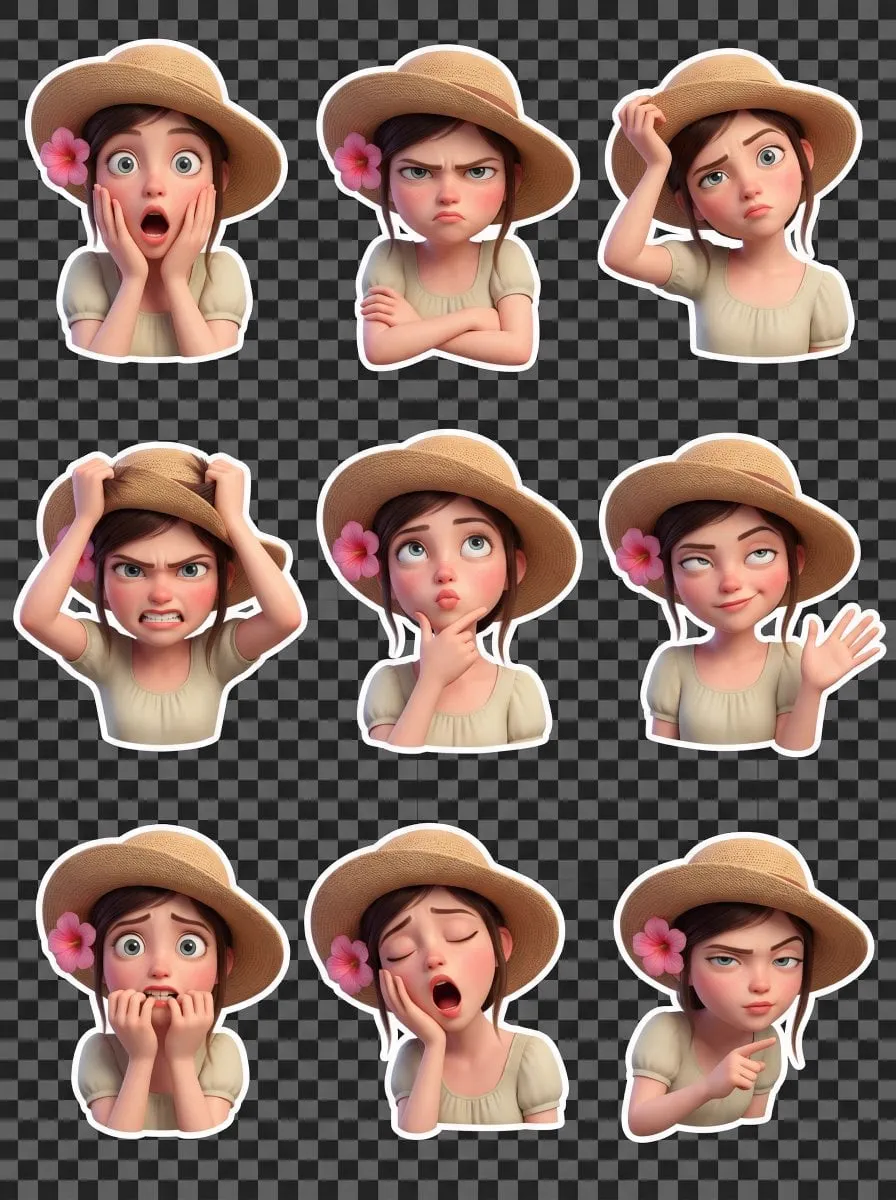
- Build a small library of reusable reference images for your hero in different angles and emotions.
- Produce at a modest scale first: test one scene, review it, then scale to a full episode.
- Review audio and pacing alongside visuals; a consistent character also needs a consistent voice and tone.
- Version your prompts and settings so you can reproduce a look later without starting over.
Common questions
Do I need powerful hardware to keep characters consistent ?
Not necessarily. Many capable tools run fully in the cloud. The bigger factor is the quality and organization of your reference material, not the power of your local machine.
What is the fastest way to get a character to look right in every shot ?
Anchor every prompt with the same reference images and the same master description. Do not improvise details from shot to shot.
How many reference images should I prepare ?
For a single hero, a focused set of well-chosen angles and expressions is enough for most projects. Quality and consistency matter more than raw quantity.
Can I switch between different generation tools in the same project ?
Yes, and it is often a good idea. The trick is to keep a common anchor — references and prompts — so the character survives the switch.
Are short videos with AI characters suitable for brand content ?
They can be, provided the character and message fit the brand. Consistency and a clear style give brand content a cohesive feel across many posts.
A repeatable production workflow
Once the foundation is in place, the best way to keep output steady and on-brand is a repeatable workflow. A single elaborate video is nice, but a system you can run week after week is what builds a following. Here is a sequence that works well for short-form series.
- Plan the episode: message, hook, and the emotional beat you want the viewer to feel.
- Lock the character references and master prompt fragments into a reusable set.
- Draft the storyboard and break it into shots, each with its own prompt.
- Generate a first rough pass with fast, economical models to check framing and flow.
- Refine the hero shots with higher-end models where the quality will show.
- Assemble the piece, checking character consistency shot by shot.
- Review audio and pacing, then ship and log what worked for the next episode.
Running the same skeleton every time reduces decision fatigue and makes it far easier to scale a series without sacrificing identity.
Mastering prompts for character anchoring
Prompting well is the single most practical skill in this pipeline. A few habits pay off immediately.
Keep a master description, verbatim
Treat your character's master description as canonical text. Reuse it word for word in every prompt rather than rewriting it each time. Small variations in wording are exactly what causes drift. When you change a detail, update the master description deliberately.
Use reference images as anchors
Wherever the tool allows, attach the same reference images to your prompts. A visual anchor is far stronger than words alone. It tells the model exactly what the character looks like, regardless of how the surrounding scene changes.
Iterate on shots, not on character
When something is off, question the scene direction before the character. Keep the identity fixed and vary the action, the camera, and the environment. This protects the character while giving you room to be creative around it.
Common pitfalls and how to avoid them
Experience teaches a few recurring mistakes. Knowing them in advance saves time and frustration.
Overloading every clip with expensive models
Spending premium compute on every frame is wasteful. Reserve the expensive engine for shots that carry the video — the hook close-up, the money shot, the reveal. Everything else works fine with an economical model.
Letting the character drift between episodes
Drift does not stop at the end of one video. Carry the same references and master description across episodes. Build a style bible for the series and review each episode against it.
Neglecting the audio side
A consistent character also needs a consistent voice. Decide on the tone and, where relevant, the voice from the start, and keep it across the series. A visual hero with a jarringly different voice each episode breaks the illusion.
Scaling from one-off clips to an episodic series
The real payoff of character consistency shows up when you build a series. Audiences recognize the hero, return for new episodes, and form an attachment that isolated clips cannot match. The challenges also grow: longer stories demand more careful world-building, clearer continuity, and stricter reference discipline.
Start with a small arc of three episodes. Define the larger arc lightly, produce the first episode, and review what held up and what drifted. Then tighten your references and produce the next. This incremental method keeps quality high without requiring perfect planning in advance.
Common questions
How much time does a single short video take ?
With an established character and a working prompt set, a short clip can go from draft to finished in a matter of minutes. The first video takes longer because you are building the foundation; the ones after it are much faster.
Do I need to write scripts for every video ?
A light script or storyboard helps keep scenes coherent and speeds up prompting. It does not need to be elaborate — a list of shots and their emotional beats is usually enough.
How do I know if my character is consistent enough ?
Screen a sequence and watch it in one pass. If the character reads as the same person throughout without you needing to check, you are in good shape. Enlist a second pair of eyes when possible.
Which tools should I start with ?
Start with one capable text-to-video tool plus an image-to-video tool. Learn to anchor characters in both. Add more specialized engines once your base workflow is smooth and repeatable.
Final thoughts
Making short viral videos is now within anyone's reach, but keeping a character consistent is what turns clips into a following. Start with solid references, anchor every prompt, mix models strategically, and reuse image-to-video where you already control the first frame. Build a system rather than chasing single hits. With that discipline, your character becomes a recognizable thread that runs through everything you publish — and that consistency is what audiences come back for.
