
Ask anyone who works with generative video what the hardest problem is, and you will hear the same answer: character consistency. A character generated at one angle looks perfect. Generate the same character from the side, in a different outfit, or under different lighting, and the face subtly changes, the hair drifts, the identity slips. For storytelling, that slip is fatal.
Multi-image fusion is the technique that fixes this. Instead of asking a model to invent a character from text alone, you feed it several reference images, and the model locks the character's identity across every frame it generates. This article explains how multi-image fusion works under the hood, why it beats older approaches, how to build a reliable workflow around it, and how to measure whether your characters actually stay consistent.
Why Character Consistency Is So Hard
Generative video models are fundamentally improvisers. A diffusion model starts with noise and iteratively removes that noise while steering toward the statistical patterns of its training data. Given a text prompt, it produces an image that is plausible, but not deterministic. There is no internal character database; every frame is a fresh improvisation.
This matters because video multiplies the problem. A single image can hide drift. A sequence of frames exposes it immediately: the character's face morphs, the costume details change, the lighting behaves differently in every shot. The more frames you generate, the more chances the model has to drift from your intention.
The Old Workarounds
Before multi-image fusion matured, creators used fragile workarounds. They wrote extremely detailed prompts describing every aspect of the character, which helped but could not survive changes in pose or lighting. They used image-to-image generation, starting from a reference image, but that anchored composition more than identity. They tried fine-tuned models, which worked but required training per character. All of these approaches helped; none of them solved the problem at production scale.
How Multi-Image Fusion Works
Multi-image fusion solves the problem at the model level by combining several inputs instead of relying on text alone.
Extracting a Character Embedding
When you provide multiple reference images, the model analyzes each one and extracts the core visual features: facial structure, skin and hair texture, eye shape, distinctive clothing details, and overall proportions. These features are compressed into a character embedding, a compact vector representation that captures what makes this character recognizable.
The embedding is what the model uses to generate. Every time the character appears, the model conditions its output on that embedding, which anchors the identity even as pose, angle, expression, and environment change.
Why Multiple Images Beat One
A single reference image can only show the character from one angle, in one expression, under one light. The embedding extracted from it is therefore incomplete. Multiple images fill in the gaps: the side view captures the profile, the close-up captures the eyes, the full body captures proportions and costume. The richer the reference set, the more stable the embedding, and the less the model has to guess.
From Embeddings to Motion
The same principle extends to video. Once the character embedding is locked, the model can animate it: change the pose, move the camera, shift the lighting, and the identity remains anchored. This is what makes multi-image fusion the backbone of modern AI character animation rather than a static-image trick.
The Role of Keyframes in Consistent Video
Character embeddings handle identity, but they do not handle composition. That is where keyframes come in.
Locking the Important Moments
A keyframe is a frame you generate deliberately, with the exact composition, expression, and camera angle you want. In a fusion-based workflow, you generate keyframes for the important beats of a scene, then let the model animate the motion between them. The keyframes guarantee that the crucial moments look right, while the interpolation handles the in-between motion.
Combining Identity and Composition
The workflow combines both techniques: the character embedding keeps the face stable, and the keyframes keep the composition intentional. Together they solve the two failure modes of AI video: identity drift and random framing.
When to Use More Keyframes
The more complex the action, the more keyframes you need. A simple dialogue scene might need one or two. A fight sequence, a dance, or an emotional transformation needs several, because the pose changes are dramatic and the model needs clear anchors to avoid morphing through the transition.
Style and Lighting Consistency Across a Scene
Character identity is only half the battle. The character exists in a world, and that world must also stay consistent. Fusion workflows handle this by letting you control the visual language around the character.
The Environment Needs Consistency Too
If a character appears in a rain-soaked alley in one shot and a sunlit rooftop in the next, the audience needs to feel that both shots belong to the same story. The same logic that anchors character identity can anchor the environment: reference images for key locations, style anchors in the prompt, and lighting directions that stay consistent across shots.
Lens and Lighting Control
Modern tools increasingly offer cinematic lens controls: focal length, depth of field, and lighting direction. When you set these once and reuse them, the scene develops a coherent visual grammar. This is what separates a collection of clips from a film.
The Practical Rule
Define the world before you generate it. A short document that fixes the palette, the time of day, the lens language, and the key locations saves hours of rework and prevents the subtle drift that destroys immersion.
Building a Reliable Fusion Workflow
Theory is useful, but production runs on process. Here is a workflow that reliably produces consistent characters.
Step 1: Build the Character Sheet
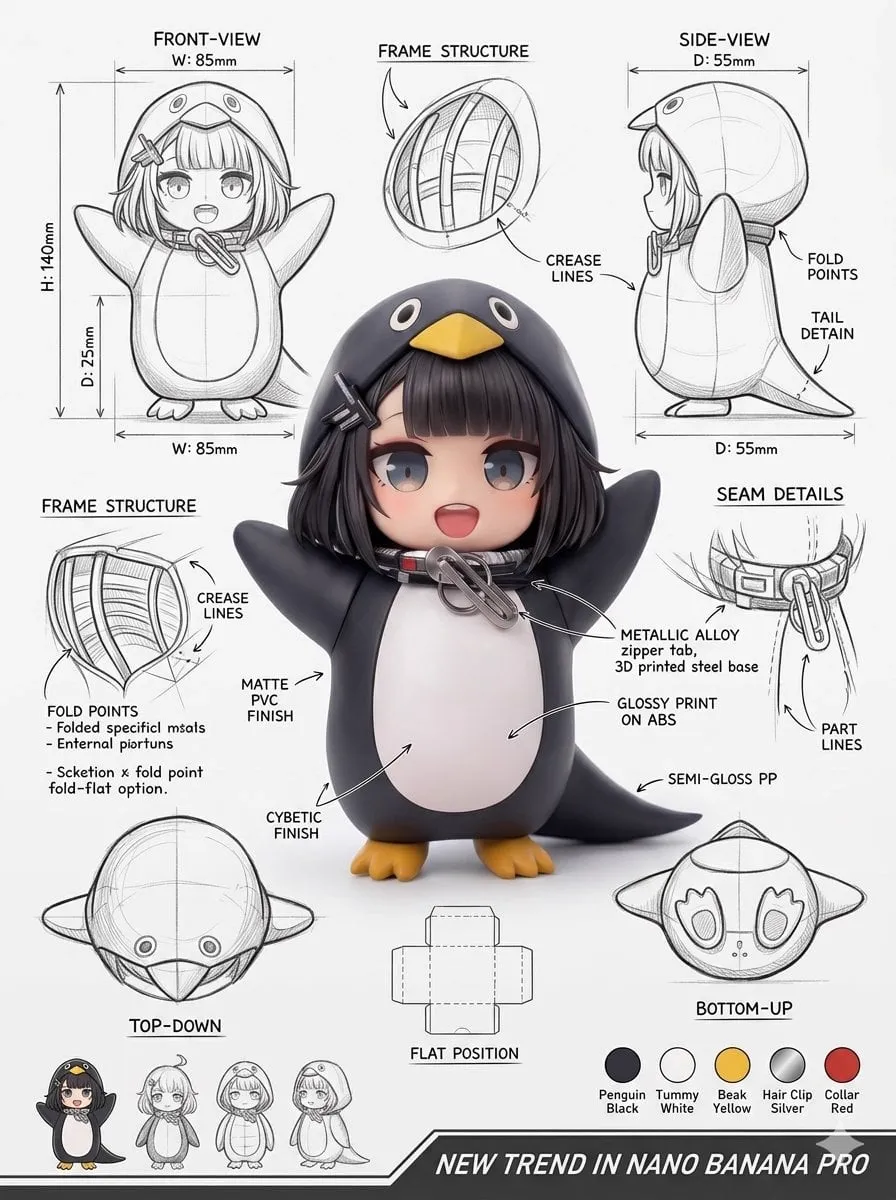
Generate or collect five to ten reference images: front, three-quarter, side, back, full body, and close-up of the face. Include a couple of expression variations. Review the set as a group: if the images do not clearly show one person, fix them before going further.
Step 2: Write the Identity Line
Write a compact textual description of the character: hair, eyes, build, skin tone, distinctive clothing, and any unique markers. This text reinforces the visual references and helps the model when a scene does not directly include the reference images.
Step 3: Lock the World
Define the style anchor for the project: palette, lighting direction, lens feel, and film grain. Use the exact same anchor phrase in every prompt.
Step 4: Generate Keyframes First
For every important beat, generate the keyframe with the premium model of your choice. Check the keyframe against the character sheet before animating it.
Step 5: Animate and Review in Batches
Animate the keyframes, then review every generated clip against the character sheet. Reject anything that drifts. Consistency failures are cheapest to fix at this stage, before anything enters the edit.
Step 6: Keep a Shot Log
Record which references, anchors, and models produced which results. Reuse the setup for future scenes, and you will stop rediscovering your own process.
Choosing the Right Tools and Models
Not all models support fusion equally. The way you choose your stack affects how much consistency work you will have to do by hand.
What to Look For
- Native multi-image reference support, not just image-to-image
- Keyframe control for video
- Consistent behavior across text-to-video and image-to-video workflows
- The ability to reuse reference sheets across projects
Premium vs. Fast Models
Premium models generally hold identity better, which makes them worth the cost for hero shots. Fast models are useful for exploration, but do not trust them for final character work. Match the model to the job and check everything against the character sheet regardless.
When Custom Training Makes Sense
If you produce a recurring character across many projects, training a custom model on that character can outperform even the best reference workflow. The trade-off is the training time and the need to update the model when the design changes. For one-off projects, fusion is faster; for long-running series, custom models win.
Measuring Consistency: Metrics That Matter
"Looks consistent" is a feeling, but you can make it measurable. A simple review protocol catches drift before it reaches your audience.
The Recognition Test
Show five frames of the character from different scenes to someone who has never seen your reference sheet. If they can identify the character across all five, consistency passes. This is the test that matters most.
The Drift Checklist
For every generated clip, check the same items in order: facial structure, hair, eye color and shape, costume details, skin tone, and proportions. A checklist makes review fast and consistent across your team.
Tracking Rejection Rates
Track how many clips you reject for consistency issues. If the rate is high, the problem is upstream: the reference set is weak, the identity line is vague, or the model is wrong for the job. Fix the source instead of regenerating endlessly.
Consistency Across Different Production Formats
Multi-image fusion is not a single technique with a single use. The way you apply it changes with the format you are producing.
Short-Form Video
For short clips, consistency pressure is concentrated: a 30-second video might contain ten shots of the same character, and drift is immediately visible in rapid cuts. The fix is a tight character sheet and a small set of keyframes, because the audience sees every transition. Keep the reference set small and the anchors consistent; short formats punish variation more than long ones.
Long-Form Episodic Content
Series and episodic content have a different failure mode: consistency must survive across episodes, weeks apart, with different writers and possibly different tools. The character sheet becomes a production asset that outlives any single episode. Lock it, version it, and treat changes to the character design as a deliberate creative decision, not an accident of generation.
Marketing and Brand Content
Brand content needs consistency across every touchpoint: the same mascot in a video, a social post, and a product page. The fusion workflow ensures the mascot is recognizable everywhere, which is exactly what brand teams care about. The reference sheet becomes the brand asset, stored alongside logos and style guides.
User-Generated and Community Workflows
When a community creates content with your characters, consistency is a shared responsibility. Provide the reference sheets, style anchors, and example workflows that let community members produce recognizable results. The more consistent the ecosystem, the stronger the community's creative output becomes.
The Format Checklist
Whatever the format, run the same checks: does the character survive rapid cuts (short form), does the design survive a production break (episodic), does the identity survive platform changes (brand), and does the workflow survive other hands (community)? Answering these four questions before production prevents most consistency disasters.
Common Pitfalls and Fixes
Using Too Few References
One image cannot capture a character. Build a proper sheet with multiple angles and expressions before generating scenes.
Changing References Mid-Project
Swapping reference images mid-project introduces drift, because the embedding changes. Lock the reference set before production starts.
Ignoring the World
Characters drift less than worlds, because worlds have no face. Fix the palette and lighting anchors early or every scene will feel like a different film.
Trusting the Model Unconditionally
Even the best fusion workflow drifts on hard shots. Review everything, reject early, and never ship a clip you have not checked against the sheet.
FAQ
Do I need multiple reference images, or is one enough?
Multiple images are strongly recommended. A single reference captures only one angle and one lighting condition, which leaves the embedding incomplete and the character unstable in other contexts.
How many reference images should I use?
Five to ten well-chosen images is a practical range: multiple angles, a full body, a close-up, and a couple of expressions. More is not automatically better; variety of angles matters more than raw quantity.
Can multi-image fusion work for non-human characters?
Yes. The technique anchors any consistent visual identity, whether it is an animal, a robot, a vehicle, or a stylized creature. The same workflow applies.
Is custom model training better than fusion?
For a character you use repeatedly, yes. For one-off projects, fusion is faster and cheaper. Many teams use fusion for daily work and train custom models only for flagship series.
How do I fix a character that keeps drifting?
Strengthen the reference set, tighten the identity line, and check whether the model supports fusion well. If drift persists, generate more keyframes and review each clip against the character sheet before it enters the edit.
