

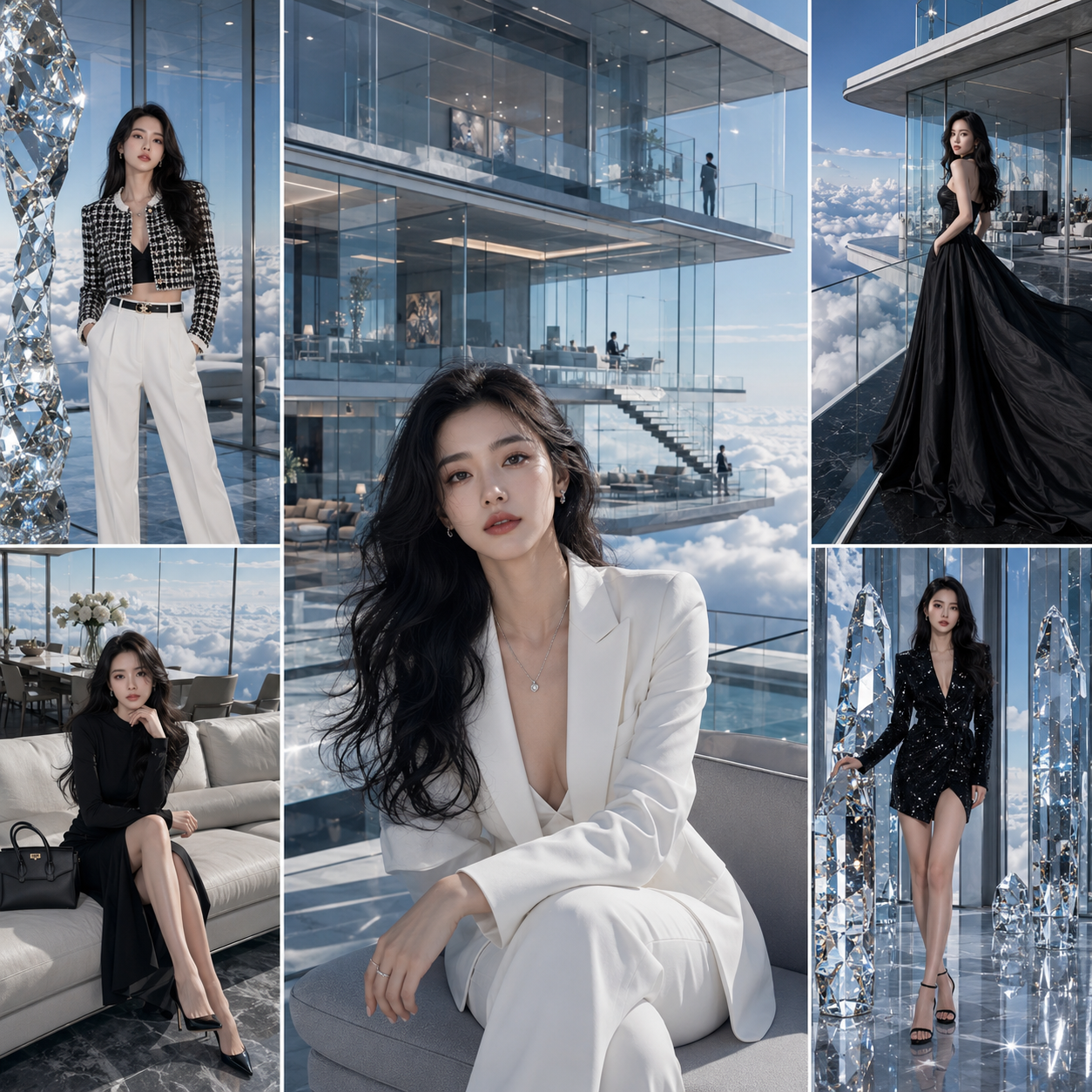
Generating one beautiful AI video is easy. Generating ten scenes in which the same character looks, dresses, and moves like the same person is genuinely hard. Character consistency is the difference between a portfolio of pretty clips and an actual story, and it is the problem that most creators hit within their first few projects. The good news is that consistency is not a matter of luck or a single magic prompt. It is a workflow. This tutorial walks through the full process: building a character reference database, using multi-image fusion, generating scenes one by one while protecting continuity, checking for anomalies, and scaling the whole system to serialized content.
Why character consistency is hard
Video generation models sample from probabilities. When you describe a character with text alone, every generation starts from a slightly different interpretation. The hair color drifts, the nose changes, the jacket becomes a different jacket. For a single clip nobody notices, but across a three-minute story the drift becomes obvious and destroys immersion.
There are three specific sources of inconsistency. First, text is lossy: words cannot fully capture a face, so the model fills in the gaps differently each time. Second, context matters: a character lit by a red sunset looks different from the same character in a blue office, and the model may interpret that as a different person. Third, motion changes identity cues: a running character with hair flying looks different from a standing character, and the model may overcorrect. Understanding these three failure modes tells you what to protect in your workflow.
Building a character reference database
The foundation of consistency is a reference set that pins down the character before any scene is generated.
Collect reference images systematically
Create a folder of images for each main character. Aim for at least eight to twelve images covering the following: a front-facing portrait with neutral expression, a side profile, a three-quarter view, at least two different expressions, at least two different outfits, and at least two different lighting conditions. If the character has distinctive accessories, like glasses or a scar, include close-ups of those details.
Keep references clean and consistent
Every reference image should show the character clearly with minimal background clutter. A busy background distracts the model from the identity features you want it to learn. Where possible, use images of the same resolution and similar framing so the model does not anchor on framing instead of identity.
Write a character sheet
Alongside the images, write a character sheet in plain text: name, age range, hair color and style, eye color, skin tone, body type, height, clothing preferences, and any permanent markings. This sheet becomes part of every prompt, reinforcing what the images establish. The combination of images plus text is much more stable than either alone.
Using multi-image fusion
Single-image references are the baseline, but multi-image fusion is what makes long-form work practical. The technique takes several reference images and blends them into a canonical identity that the generation model applies across shots.
How fusion works in practice
The tool ingests your reference set and builds a compact identity representation: the stable features that appear in every image, filtered against the variations in expression, pose, and lighting. When you generate a scene, the model starts from that representation instead of reinterpreting your text prompt from scratch.
What to include in the fusion set
Include images that show the range of the character without contradicting each other. Do not include two images that disagree on a core feature, like different hair colors, because the fused identity will be muddled. Balanced coverage across angles and expressions produces a stable identity.
When fusion is not enough
Fusion helps with identity, but it does not guarantee everything. Extreme camera angles, fast motion, dramatic lighting, and partial occlusion still stress the system. Plan for these by checking every generated scene against the reference and regenerating when the character drifts.
The scene-by-scene generation workflow
With the reference system in place, production becomes a disciplined loop. The order matters more than any individual tool.
Step 1: Write the scene list with continuity notes
Before generating anything, write out every scene and note what the character is wearing, where they are, what time of day it is, and what the light looks like. These continuity notes are your checklist. When you describe a scene in a prompt, copy the relevant notes in, verbatim, so the model gets the same clothing and environment description every time.
Step 2: Generate each scene independently
Generate each scene as its own unit, using the reference images and the character sheet plus the scene-specific continuity notes. Do not try to generate a whole sequence in one pass; per-scene generation gives you control and makes failures cheap to fix.
Step 3: Lock seeds and prompts per scene
When a scene comes out right, save the prompt and the seed. If you need to regenerate a variant, start from the locked prompt and seed, changing only the intended element. This gives you a reproducible baseline and prevents accidental drift.
Step 4: Assemble and check the sequence
Put the scenes together in order and watch the whole sequence. Continuity problems are easiest to see in context: a costume change that happens mid-scene, a face that shifts between two adjacent shots, a light that jumps. Mark every issue with a timestamp and fix them one at a time.
Detecting character anomalies
Some inconsistency is obvious, but subtle drift can be hard to catch, especially in long projects. Build checks into your workflow.
Use reference comparison grids
Periodically place the latest generated frames next to the reference set and compare them side by side. Look specifically at the features the model tends to distort: jawline, nose shape, eye spacing, hairline. A quick comparison grid of four to eight frames catches drift early.
Watch the problem shots
Certain shot types generate more anomalies than others: profile views, extreme close-ups, shots from above, and high-motion sequences. When your scene list includes these, flag them in advance and budget extra review time for them.
Keep an anomaly log
Track which prompts, scenes, or models produced anomalies. Over a few projects, this log becomes a personal playbook: you will know which angles need a stronger reference, which lighting conditions break the model, and which tools handle your character best.
Protecting narrative coherence over the long run
Consistency is not only visual. A character who behaves differently from scene to scene also breaks the story.
Maintain a story bible
Keep a story bible that records not just appearance but also personality, voice, relationships, and backstory. Before generating any dialogue scene, check the bible so the character's reactions stay in character. The bible is the narrative counterpart of the image reference set.
Keep style keys stable
Decide the overall look of the project once: color grade, lighting philosophy, lens style, grain. Apply the same style keys to every scene. Visual stability across the whole piece makes individual characters read as part of one world.
Plan serialized content with reusable assets
If you are making a series, treat the character assets as reusable intellectual property. Save the reference set, the character sheet, and the style keys in a project folder that you can reload for the next episode. The first episode is expensive; every episode after that gets cheaper because the foundation is already built.
Scaling to series production
Once the single-project workflow works, you can scale it to recurring content.
Automate the repetitive parts
Standardize the prompt templates for each recurring character and location. Save them as reusable blocks so the same scene description produces the same character frame after frame. This is where the process stops feeling like a creative gamble and starts feeling like production.
Batch by scene type
Group scenes by similarity and generate them together. All dialogue close-ups can share one reference setup; all establishing shots can share another. Batching reduces context switching and keeps the visual language uniform.
Budget for review time
Series production is not a single burst; it is a treadmill. Budget a fixed amount of time for review and anomaly fixing in every episode, because consistency problems compound over time. Skipping review for two episodes creates a mess that takes three times longer to fix later.
Tools and techniques worth testing
Different projects need different tools, but a few techniques consistently help.
Seed control
Seeds are the cheapest consistency tool you have. Locking a seed lets you regenerate a scene with a small prompt change while keeping the overall structure of the image. Learn how your tool handles seeds and use them deliberately.
Style references
Beyond character references, collect style references for the world: color palettes, architectural styles, prop designs. Feeding these to the generator alongside character images keeps the environment consistent even when you describe it loosely in text.
Regional and specialized models
Some models are tuned for specific aesthetics, such as Asian visual styles or particular animation looks. Matching the model to the content style reduces the amount of corrective work you need to do. Keep a small portfolio of models and choose per project rather than defaulting to one.
Common mistakes and how to avoid them
Relying on text alone
Describing a character in words and expecting consistency is the most common failure. Always pair text with reference images. The words anchor behavior and narrative; the images anchor appearance.
Changing references mid-project
Once you start generating, do not swap the reference set unless you intend to redesign the character. A different set of references produces a different identity, and your earlier scenes will no longer match.
Ignoring context continuity
Two shots of the same character in different lighting are fine, but the change must look intentional. If a scene is supposed to be continuous, keep lighting and camera language consistent within it. Sudden jumps read as errors, not as style.
Over-generating without review
Generating fifty variants of a scene and picking the prettiest one is tempting, but it burns time and often produces a shot that does not match the sequence. Generate a few drafts, review them in context, and refine deliberately.
Frequently asked questions
How many reference images do I need per character?
Eight to twelve is a solid starting point. More is useful when the character has complex features or appears in many different lighting conditions. Quality matters more than quantity; clean, focused images beat a pile of noisy ones.
Can I keep consistency with text prompts only?
Poorly, and only for short projects with simple characters. For anything longer than a single clip, reference images and a character sheet are the practical minimum.
What do I do when a scene still drifts?
Regenerate that scene rather than trying to fix it in post-production. Start from the locked prompt and seed, strengthen the reference for the specific feature that drifted, and generate again. Fixing a generation at the source is cheaper than compositing.
Does multi-image fusion work for side characters too?
Yes, but prioritize. Your main character deserves a full reference set; a character with three lines of dialogue can get away with a smaller set and a detailed character sheet. Spend the effort where the audience spends attention.
How do I know when consistency is good enough?
Watch the sequence as an audience member would. If you have to remind yourself that two shots are the same character, the consistency is not good enough. When the character reads as one person without effort, you are done.
Wrapping up
Character consistency in AI video is a system, not a trick. Build a reference database, fuse it into a stable identity, generate scene by scene with locked prompts and seeds, and review the assembled sequence for anomalies. Keep a story bible for narrative coherence and reusable assets for series work. It is more discipline than any single tool, and it is exactly what separates storytellers from people who generate clips. Start your next project with the reference set first, and the rest of the workflow will fall into place.
