
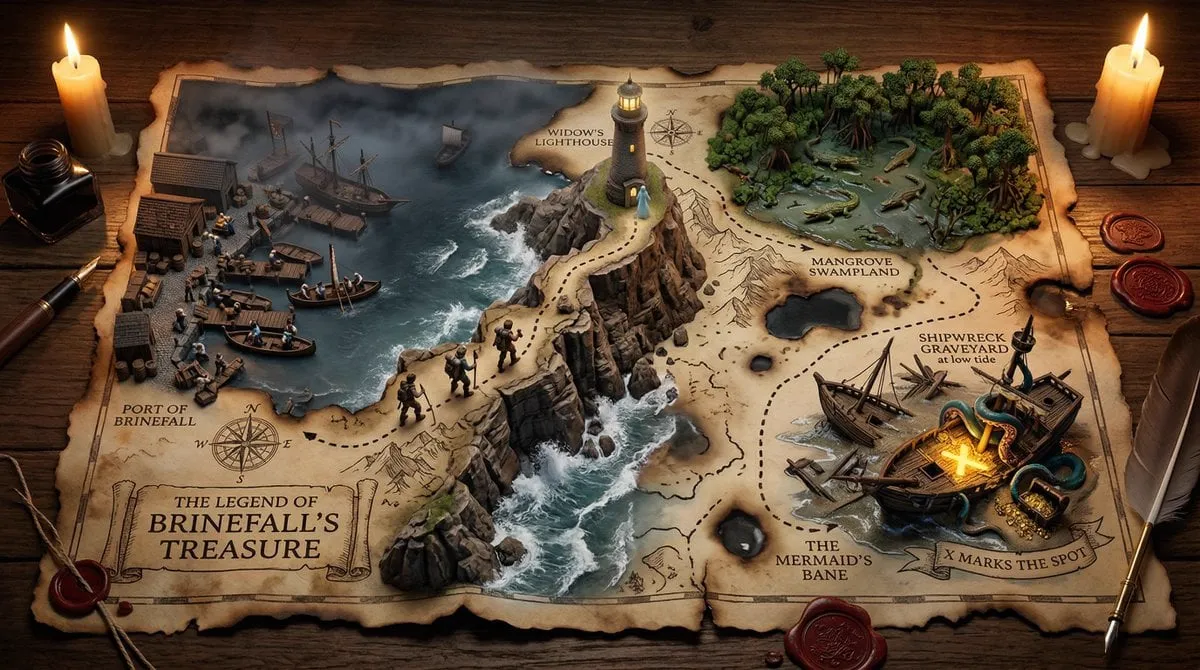
Text-to-video has moved from a research curiosity to a practical production tool. The first generation of models produced clips that were impressive for five seconds and useless for anything else. The current generation can hold a scene together, respect a prompt, and deliver footage that sits comfortably next to traditionally shot material. The difference between an amateur-looking clip and a professional one is rarely the model itself; it is how the creator uses it.
This guide covers the full journey from a written idea to a finished, high-quality video: how the technology works at a level you actually need, how to choose a model for your use case, how to write prompts that produce predictable results, and how to keep quality high through reference consistency, resolution, and audio.
What High-Quality Text-to-Video Actually Means
Quality is not one thing. When creators say a video looks "high quality," they usually mean several properties at once:
- Fidelity to the prompt: the output matches what was described, including details, style, and mood.
- Physical plausibility: motion follows the laws of the world, and objects do not warp or duplicate.
- Temporal coherence: a character or scene stays stable across frames, not just within one shot.
- Visual craft: lighting, composition, color, and lens behavior feel deliberate rather than random.
- Technical cleanliness: sharpness, resolution, and frame rate hold up on the platform where the video will be watched.
Different projects weight these properties differently. A product demo needs fidelity and cleanliness; a music video needs visual craft and style; a narrative test needs temporal coherence. Decide which properties matter most before you choose a model or write a prompt.
How Text-to-Video Models Work (Without the Math)
You do not need to understand the architecture in depth, but a working mental model helps you debug failures. Modern models are trained on massive collections of video clips paired with text descriptions. They learn the statistical relationships between words, images, and motion. When you give them a prompt, they generate new frames that are consistent with what they learned.
Two practical consequences follow from this:
- Models are only as good as their training data. If your prompt describes a niche subject, a specific historical era, or an unusual camera move, results will vary because the model has seen fewer examples.
- Generation is probabilistic. The same prompt can produce different results on different runs. Quality work comes from generating multiple candidates and selecting, not from a single lucky generation.
Keep this mental model in mind: you are not commanding a machine; you are sampling from a distribution and curating the best results.
Choosing a Model for Your Use Case
There is no single best model. The right choice depends on what you are making. Here is a practical way to think about the landscape:
- Premium cinematic models: best when you need photorealistic motion, complex scenes, and near-professional lighting. They are slower and more expensive, so reserve them for hero shots and client work.
- Fast general models: best for iteration, drafts, and high-volume social content where speed matters more than the last 5 percent of quality.
- Specialized models: some models excel at specific things, like anime, character animation, or stylized motion. If your brand has a consistent style, a specialized model may beat a general one at every price point.
- Image-to-video hybrids: many workflows start from a generated still image and animate it. This route gives you more control over composition and style, and it is often more consistent than pure text-to-video.
A good strategy for a solo creator: pick one fast model for drafts and one premium model for finals. Draft everything on the fast model, lock the shots you like, then regenerate the hero moments on the premium model.
Writing Prompts That Produce Predictable Results
Prompt quality is the highest-leverage skill in text-to-video. A vague prompt produces vague output; a precise prompt produces footage you can plan around. Build your prompts from the same elements every time:
- Subject: who or what is in the frame, with enough specificity to pin down appearance.
- Action: what is happening, including the direction and speed of motion.
- Environment: where the scene takes place and what the space looks like.
- Lighting: source, direction, quality, and time of day.
- Camera: lens, distance, angle, and movement.
- Mood and style: the emotional tone and the visual reference.
Example of a weak prompt: "A dog running in a park, cinematic."
Example of a strong prompt: "Close-up, a border collie running toward the camera through golden-hour light in a wide green park, shallow depth of field, slow tracking shot, warm color grade, gentle breeze moving the grass."
Notice that the strong prompt reads like a camera department's notes, not a poem. The model works better when you describe the observable properties of the image rather than the feeling you want the viewer to have. Describe what the camera sees; the feeling follows.
Multi-Reference Systems: Consistency Beyond the Prompt
The hardest problem in text-to-video is not generating one good shot; it is generating many shots that belong to the same project. A character whose face changes between scenes, or a product whose color drifts, destroys the illusion.
Modern workflows solve this with reference images. Most tools let you attach one or more images that define the subject, the environment, or the style. Build a reference set before you generate:
- Character sheet: several angles of the same character, ideally in the same lighting.
- Environment reference: the key location, shot from the angle you plan to use.
- Style reference: an image that captures the color palette, texture, and mood.
Keep the references consistent across all shots. If the character sheet has warm lighting but your scene prompt asks for moonlight, the model will struggle; the conflict appears as inconsistency. Align your references and prompts so they reinforce each other.
Resolution, Frame Rate, and Technical Quality
High resolution does not equal high quality, but it gives you options. A 4K output lets you crop, reframe, and stabilize without visible softening. Generate at the highest resolution your budget allows, then deliver at the resolution the platform needs.
Frame rate matters for the feel of the motion. Standard 24 or 30 fps reads as cinematic for most content; 60 fps suits fast motion, gaming, and product close-ups. Match the frame rate to the subject. Interpolating between frames can smooth slow motion, but it can also introduce artifacts, so test before relying on it.
Keep an eye on compression. Video platforms recompress aggressively, and fine texture detail is the first thing to go. Strong contrast and clean color grading survive compression better than soft gradients and busy patterns.
Integrating Audio: Music, Voice, and Sound Design
A video is not finished when the picture looks good. Audio is half the experience, and it is where AI-assisted workflows save the most time.
- Voice-over: text-to-speech voices now support emotional control, pacing, and multiple languages. Generate the voice-over early in the process so the edit can follow its rhythm.
- Music: AI music generators can produce tracks matched to mood and duration. Choose a track that supports the emotional arc instead of one that merely fills silence.
- Sound effects: subtle effects, like footsteps, wind, or a door closing, anchor the image in a believable world. A small library of reusable effects covers most projects.
The audio should be designed, not just added. Introduce the music quietly, let it build with the visuals, and give the voice-over room to breathe. This is the cheapest way to make AI footage feel professionally produced.
A Production Workflow from Text to Published Video
Here is a repeatable workflow that keeps quality high:
- Step 1, concept: write a one-page brief: audience, message, shots, and the mood of each shot.
- Step 2, references: assemble the character, environment, and style references.
- Step 3, draft: generate rough versions of every shot on a fast model. Select the best takes and identify problem shots.
- Step 4, refine: regenerate problem shots with tighter prompts or additional references. Regenerate hero moments on the premium model.
- Step 5, assemble: edit the selected shots in a timeline, then add voice-over, music, and effects.
- Step 6, final pass: watch with sound, check consistency across shots, and export at the resolution and frame rate you need.
This workflow is deliberately iterative. The biggest mistake is treating generation as a one-shot process: write a prompt, render, and publish. The best results come from generating, selecting, and refining in short loops. Keep the loop tight while the idea is fresh, and resist the urge to tweak a draft forever; set a limit per shot, and move to the next one when the shot is good enough for its role in the edit.
Common Quality Problems and How to Fix Them
- Faces distort during motion: reduce the camera movement, use a character reference, or switch to image-to-video.
- Objects warp between frames: shorten the shot, simplify the action, or regenerate with a stronger prompt.
- Style drifts across shots: tighten the style reference and keep prompts parallel in structure.
- Motion feels too slow or too fast: adjust the action language in the prompt; "slow tracking shot" and "rapid dolly-in" produce different feels.
- Text in the frame is garbled: avoid text in generated footage, or add clean typography in the edit instead.
Text-to-Video for Different Content Types
The same generation workflow looks different depending on what you are producing. Understanding the differences saves you from applying the wrong standard to the wrong project:
- Social media clips: prioritize speed and vertical format. A fast model, a strong hook, and heavy use of captions and audio matter more than perfect physics. Iterate quickly and publish; you can always make a better version next time.
- Product demos and explainers: prioritize fidelity and cleanliness. The product must look exactly like itself, so use reference images heavily and avoid risky camera moves that can distort logos and text.
- Concept art and mood videos: prioritize style and atmosphere. This is where a specialized model or a strong style reference pays off; the audience is evaluating mood, not factual accuracy.
- Narrative and character work: prioritize temporal coherence and consistency. Build character sheets, reuse references, and generate long takes only when the model is reliable at holding subjects stable.
Matching your workflow to the content type is what separates usable production from endless re-rolling. Define the quality bar up front, then choose the model, the prompt style, and the iteration budget accordingly.
FAQ
Can text-to-video replace traditional shooting?
For many content formats, yes, especially for social media, explainers, and concept work. For projects that need real people, real locations, or precise product details, a hybrid approach works better: AI for what is hard to shoot, traditional footage for what must be real.
How much iteration should I expect?
Plan for multiple generations per shot. The ratio depends on the complexity, but successful creators treat the first pass as a draft and expect to re-roll a meaningful share of shots.
Is AI-generated video legal to use commercially?
You need to check the terms of the specific tool you use. Most major tools allow commercial use, but some restrict training on outputs or require attribution. Read the license for the model, not just the headline features.
What is the minimum hardware I need?
If you use cloud-based tools, a normal laptop is enough; the heavy compute happens on the provider's servers. Local models require a powerful GPU, which matters mostly if you need privacy or very high volume.
Final Thoughts
High-quality text-to-video is a craft, not a magic button. The models handle the raw generation; you bring the judgment: what to prompt, which takes to keep, how to keep the project consistent, and how to finish the video with sound and edit. Learn to write precise prompts, build reference sets, and iterate in loops, and the gap between your output and a professional production will close faster than you expect.
