

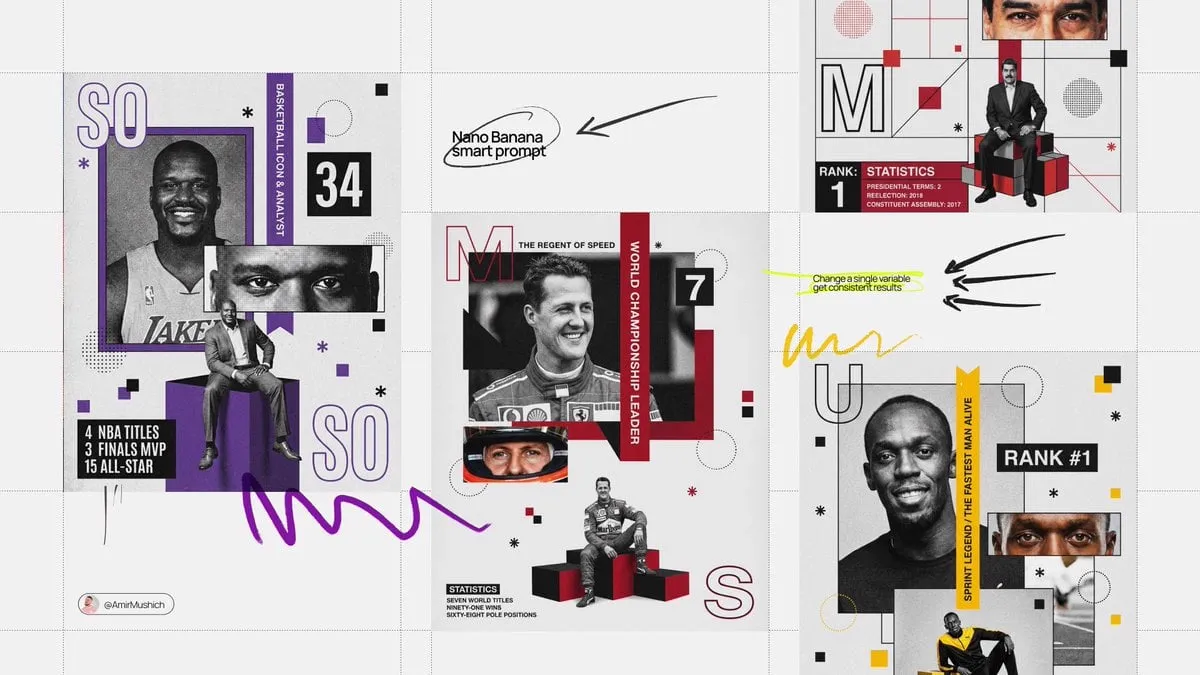
Every week, someone posts the same complaint in AI communities: "I wrote a detailed prompt and the model still gave me a generic answer." The problem is rarely the model. It is almost always the prompt. As generative AI moved from a novelty into daily work for writers, marketers, developers, and designers, the ability to write precise, well-structured requests has become one of the most valuable practical skills you can learn. It does not require a computer science degree, and it does not require memorizing a secret syntax. It requires understanding how language models interpret instructions, and then building a repeatable method around that understanding.
This guide walks through the complete prompt-writing process: the core building blocks of a strong request, how to adapt those blocks for chatbots and for image generators, how to use negative prompting and iteration to push results from acceptable to excellent, and the common mistakes that quietly ruin most prompts. The examples are practical, the structure varies from section to section, and everything here can be applied today with the tools you already use.
Why prompt quality now decides output quality
The most important shift in the last few years is that models got dramatically better, and that improvement moved the bottleneck. When models could barely follow instructions, the limiting factor was the model itself. Today, a frontier model can reason through a multi-step task, respect tone constraints, and keep a consistent style across a long conversation. That means the difference between a mediocre result and a great one is usually the request that produced it.
This is visible in everyday workflows. The same image model, given "a cat" and given a structured prompt with lighting, composition, lens, palette, and negative constraints, produces two completely different images. The same chatbot, asked to "summarize this report" versus asked to act as a skeptical editor and list the three weakest arguments, produces two completely different summaries. Prompting is not about tricking the model with magic words. It is about communicating intent clearly enough that the model can use the full range of its capability.
There is also an economic angle. Every wasted generation, every rewritten draft, and every unusable image costs time. In a production environment where a team generates hundreds of assets per week, a 20 percent improvement in first-try success rate saves more hours than almost any other optimization. Prompting is the highest-leverage skill in the AI workflow because it sits at the very start of the pipeline, and mistakes made there are multiplied downstream.
The four building blocks of a strong prompt
Nearly every good prompt, whether for a chatbot or an image generator, contains the same four components. You do not always need all four, but when a prompt fails, checking these four usually reveals why.
The first is the role. Telling the model who it is changes the entire frame of reference. "You are a senior technical editor who has worked on API documentation for ten years" produces different vocabulary, different priorities, and different standards than an unqualified instruction. Roles work because they supply implicit context that you would otherwise have to spell out sentence by sentence.
The second is the context. This is the situation, the audience, the constraints, and the background the model needs before it can act. Context answers questions like: Who will read this? What do they already know? What are we trying to achieve? A prompt that starts with context allows the model to make better micro-decisions throughout its response, instead of guessing.
The third is the task. This is the actual verb: write, summarize, compare, generate, refactor, outline. The task should be specific and singular. "Improve this text" is a weak task because it does not say what improvement means. "Rewrite this paragraph so a 14-year-old can understand it, keeping the technical terms but explaining each one" is a strong task because it defines success.
The fourth is the output format. Specifying how the answer should look removes ambiguity and makes results usable immediately. A format can be as simple as "three bullet points" or as detailed as "a JSON object with fields id, title, and summary, followed by a one-paragraph recommendation." For chatbots, output formats turn free-form answers into structured deliverables. For image generators, the equivalent is specifying aspect ratio, style, and level of detail.
A practical example makes the difference obvious. A weak prompt: "Write a product description." A structured prompt: "You are an e-commerce copywriter. The product is a rechargeable camping lantern that also charges phones, aimed at weekend hikers who are not tech-savvy. Write a 120-word product description with a short headline, three feature bullets, and a closing line that emphasizes ease of use. Do not use jargon." Same model, same task, radically different result.
Writing prompts for chatbots: turning conversation into instruction
Chatbots and LLM-based assistants are instruction followers, which means your prompt is a mini-specification for the response. The single most useful habit is to write the prompt before you need it, and to treat it as a document you can revise.
Start with the role and context together. Instead of "Explain machine learning," try "You are a data science tutor. Explain the concept of overfitting to a product manager who has never written code. Use an analogy from everyday life first, then the formal definition, then one concrete example from a recommendation system." Notice how the audience constraint changes the explanation: no math, no jargon, one analogy, one example.
For multi-step tasks, break the request into numbered or clearly separated steps. Models follow sequential instructions far more reliably than combined ones. A common pattern is: first do this, then check that, then output in this format. For example: "Read the attached draft. Step 1: identify the five claims that lack supporting evidence. Step 2: for each claim, suggest one concrete source type or data point that would support it. Step 3: output a table with columns Claim, Evidence Gap, Suggested Support. Do not rewrite the draft."
Conversation memory is another lever. In a chat interface, you can build context across turns. State the goal once at the top of the conversation, then refer back to it: "Remember the audience from my first message" or "Apply the same tone as your last response." This is especially powerful for long projects like editing a document chapter by chapter or debugging a piece of code through several rounds of fixes.
Structured outputs deserve special attention. If you need data back, ask for a specific format and stick to it. Models are remarkably good at producing JSON, CSV, or Markdown tables when told exactly what to produce. This turns a chatbot from a conversation partner into a data pipeline, which is why so many automation workflows are built on prompt-shaped requests.
Finally, ask the model to verify its own work. A prompt that ends with "Before answering, check whether the final number is consistent with the assumptions you stated" or "List any assumptions you made" produces more reliable answers. This is not magic; it simply gives the model a second pass over its own output, and that second pass catches a surprising number of errors.
Writing prompts for image generators: from words to visuals
Image generation has a different grammar than text generation. A text model interprets your words as instructions; an image model interprets your words as descriptions of pixels, lighting, composition, and style. The same sentence that works well for a chatbot will often produce a blurry, generic image.
The key difference is that image prompts need to be concrete about visual qualities. Where did you put the subject? What is the light doing? What is in the frame, and what is deliberately absent? What art style, medium, or era does it belong to? A prompt like "a forest" gives the model almost no direction. A prompt like "a misty pine forest at dawn, low sun rays cutting diagonally through the trees, a small wooden cabin in the lower right, cinematic wide shot, muted green and gold palette, photorealistic" gives it a scene to build.
Subject-first structure works well. Put the main subject at the beginning, then describe its appearance, then the environment, then lighting and atmosphere, then technical style. This ordering matters because the first few words carry the most weight in many models. If the subject is a character, describe the character before the background; if the background is the point, invert the order.
Aspect ratio and framing are practical parameters that change everything. A vertical composition suits phone wallpapers and social stories; a wide 16:9 suits video stills and banners; a square suits profile assets. Mention the intended use in the prompt itself, such as "YouTube thumbnail, high contrast, readable at small size." Many image tools also accept explicit resolution or aspect-ratio parameters, and using both the textual description and the technical parameters gives the most control.
Style words are powerful but need to be used with care. Broad terms like "cinematic," "minimalist," or "3D render" are understood by most models, but stacking too many conflicting style words creates mush. Pick one dominant style and one or two supporting styles. If you want a consistent series of images, keep a style block at the end of every prompt: "consistent style: matte digital painting, warm palette, soft rim light." Repeating that block across prompts is the cheapest way to get a coherent set.
Negative prompting: telling the model what not to do
The biggest upgrade for most image prompts is negative prompting. Generative models will happily add extra fingers, warped text, watermarks, or clutter unless you tell them not to. A negative prompt is a list of things to avoid, and it works because it narrows the sampling space the model searches.
For images, common negative terms include: blurry, low quality, distorted, extra limbs, deformed hands, watermark, text, logo, oversaturated, cluttered background, duplicate elements. The exact list depends on your subject. A portrait benefits from "no background elements, no text, no jewelry" while a landscape benefits from "no people, no vehicles, no power lines."
Negative prompting is not only for images. In text generation, the equivalent is exclusion constraints: "Do not use the word revolutionize. Do not mention specific competitors. Do not include statistics you cannot verify." Adding two or three exclusions is often more effective than adding two or three positive adjectives, because the model already knows how to be positive but needs to know your boundaries.
Use exclusions sparingly and specifically. A negative prompt stuffed with fifty terms can confuse the model and degrade the result. Five well-chosen exclusions beat fifty random ones. If you find yourself fighting the same artifact repeatedly, promote that fix into a saved template, so every future prompt in that project starts with the known-good constraints.
Iteration: the workflow that turns drafts into finished work
No prompt is perfect on the first try, and the fastest people in this field are not the ones with magical wording; they are the ones with a fast iteration loop. The workflow is simple: generate, evaluate against concrete criteria, change one variable, generate again.
Change one variable at a time. If you adjust the subject and the style and the lighting in the same iteration, you cannot tell which change fixed the problem. Keep a small log of what changed between versions, even if it is just two lines in a note. After a few sessions, you will have a personal library of what works for your subjects, your tools, and your taste.
For chatbots, iteration usually means refining the instructions rather than rewording the same request. If the answer is too long, add a length constraint. If it is too formal, add a tone constraint. If it misses a point, add it explicitly to the context. Each revision is a small experiment, and the prompt accumulates knowledge about the task.
For images, iteration often means zooming in on one part of the problem. Composition wrong? Rewrite the layout sentence. Lighting flat? Change the light description and leave everything else untouched. Face off? Adjust the negative prompt or the character description. Because each generation costs time and sometimes money, disciplined iteration is also the most cost-effective habit you can build.
A useful framing device is the "prompt contract": before generating, write down what a successful result looks like. Three criteria are enough. "The character is centered, the background is clean, the mood is tense." Then evaluate the result against the contract. If it passes, stop. If not, change exactly one clause and retry. This prevents the common failure mode of endlessly regenerating in the hope that luck will intervene.
Common mistakes and how to fix them
The most common mistake is under-specification. Short prompts produce generic output because they leave the model to guess everything. Fix it by adding role, context, task, and format, or for images, subject, environment, light, and style.
The second mistake is over-specification with contradictions. A prompt that asks for "minimalist, highly detailed, flat illustration, photorealistic, sketch style" pulls the model in five directions at once. Fix it by choosing one dominant style and demoting the others to supporting notes, or dropping them entirely.
The third mistake is copying prompts without understanding them. Prompts found online often contain hidden assumptions, style tokens, or artist names that produce results the copy-paster did not intend. Use them as starting points, then rewrite them in your own words so you know what each part does.
The fourth mistake is ignoring the output format. Chatbot responses are much harder to reuse when the format is unspecified. Adding "output as a table," "return only the code," or "end with a one-sentence summary" turns a wall of text into a deliverable.
The fifth mistake is forgetting the audience. A prompt written without considering who will read the output produces content that is technically correct but useless in context. Every good prompt answers the question: who is this for, and what will they do with it?
Ethics, safety, and practical boundaries
Prompting skill comes with responsibility. The same techniques that produce beautiful brand imagery can produce deceptive content, and the same instruction-following that makes chatbots productive can be used to extract harmful answers. Keep a few guardrails in mind.
Do not ask models to impersonate real people or create content that could deceive. Do not paste private or sensitive information into a public tool interface when you do not know how the data is handled. For teams, establish a simple policy: what kind of content can be generated, what must be reviewed by a human, and what is never acceptable. These policies are not about limiting creativity; they are about making the workflow safe to scale.
Also remember that models can be wrong with total confidence. The most impressive-sounding answer is not necessarily the correct one. For anything factual, financial, or medical, treat the model output as a draft that requires verification. This is not a limitation to work around; it is a workflow requirement, and the best prompters build verification steps directly into their prompts, asking the model to cite assumptions, flag uncertainty, or double-check arithmetic.
FAQ
Do I need to learn a special prompt language? No. The models understand plain language. Technical parameters like aspect ratio, temperature, or seed are helpful in specific tools, but the core skill is clarity, structure, and iteration, not syntax.
How long should a prompt be? As long as it needs to be and no longer. A one-sentence prompt is fine for a simple task. A multi-paragraph prompt is fine for a complex task. The goal is to include all the information the model needs and no filler.
Does the order of words matter? Yes, especially in image generation, where the beginning of the prompt usually carries more weight. Put the subject and the most important constraints early, and keep style modifiers consistent at the end.
Why do my images still have bad hands and text? Because those are genuinely hard for current models. Use negative prompts for "deformed hands," "extra fingers," and "text," and if text matters, generate it separately and composite it in an editor.
Can I reuse prompts across different models? Roughly, yes, but each model has its own temperament. A prompt tuned for one image model may need small adjustments for another. Keep a prompt library per project, not per tool, and test each prompt on the tool you actually use.
How do I get consistent characters across many images? Fix the character description as a reusable block, use the same seed or reference images when the tool supports them, and keep style words identical across prompts. Some tools also support image-to-image workflows where the character is anchored to a reference.
What is the fastest way to get better at prompting? Generate, evaluate against a written contract, change one variable, repeat. The skill grows through iterations, not through reading. Twenty deliberate iterations teach more than a hundred casual ones.
Is prompt quality really worth this much attention? Yes. The prompt is the interface between your intention and the model's capability. Every hour spent improving your prompts saves many hours downstream, and it is one of the few skills in the AI stack that transfers across every tool and every model you will ever use.
